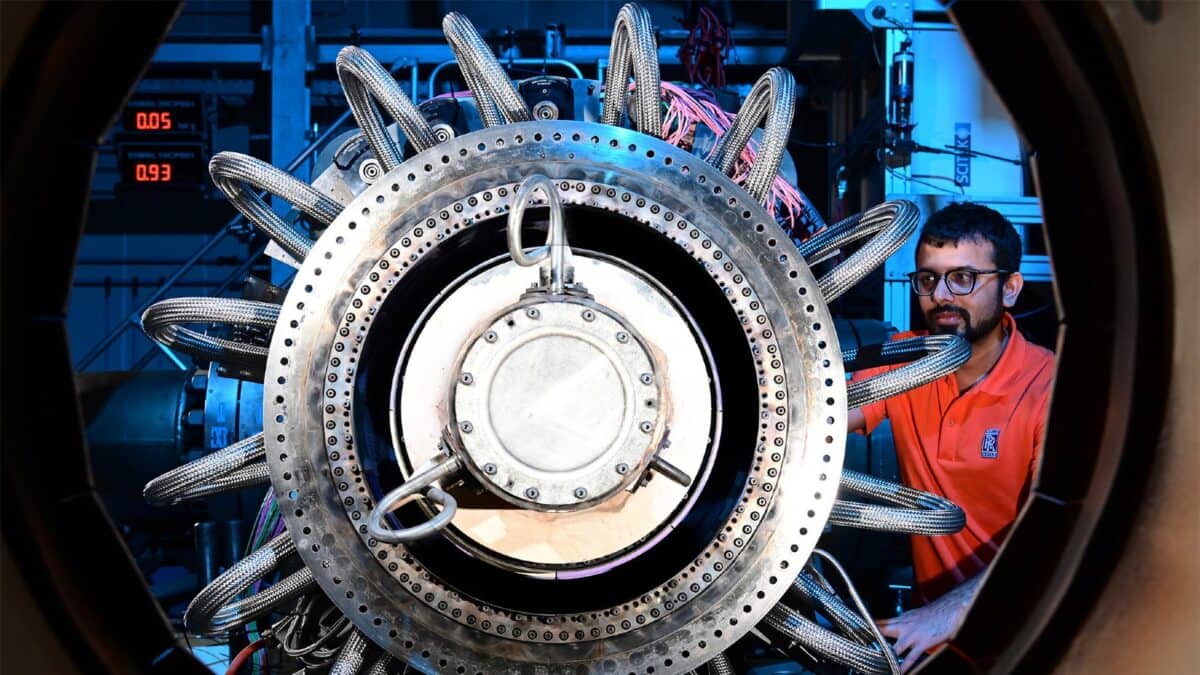
Rolls-Royce (LSE: RR.) shares could be on track for further gains after the company’s latest revelation rocked the aviation world. The aerospace giant has achieved what was once considered impossible: running a modern jet engine at full take-off power on pure hydrogen alone.
This breakthrough marks a world-first for aviation and positions Rolls-Royce at the forefront of zero-carbon flight technology.
Could this be the boost it needs to reverse months of stagnant price growth?
What exactly happened at the test?
Rolls-Royce and easyJet confirmed a successful simulated flight from start-up to landing using nothing but hydrogen fuel. They used a modified Pearl 15 engine at NASA’s Stennis Space Center in Mississippi.
Other tests have tried this before but never succeeded at full power. The engine held its full-rated take-off thrust of 15,250 lb on 100% hydrogen across the complete flight cycle.
This programme has given us the clearest understanding in the industry of how hydrogen behaves in a modern aero gas turbine
Adam Newman, Chief Engineer of Rolls-Royce’s Hydrogen Demonstrator Programme.
A green energy game-changer
This development is another nail in the coffin for oil and similar fossil fuels. Burn hydrogen cleanly and what emerges is water vapor – not less CO₂, but none of it.
Combustion keeps the turbomachinery the industry has spent a century refining while changing only the fuel chemistry. This maintains the power-to-weight ratio that makes gas turbines worth flying.
For FTSE 100 investors, this translates to tangible benefits:
| Benefit | Why it matters |
|---|---|
| Regulatory protection | Against future combustion bans |
| First-mover advantage | In zero-carbon aviation technology |
| Licence to operate | As emissions regulations tighten globally |
Rolls is already posting exceptional results, and looks likely to continue:
- Underlying operating profit reached £3.5bn up 40% from 2024.
- Revenue came in at £20.1bn, up 14% year-on-year.
- Free cash flow reached £3.3bn.
Analysts haven’t glossed over the development, with UBS in April eyeing a price target of 1,400p and Bank of America still holding a target of 1,600p set in February.
But how commercially viable is hydrogen-powered aviation?
The challenges ahead
A hydrogen-powered airliner is still a long way off. Proving an engine can run on hydrogen on a test stand isn’t the same as revenue service.
Hydrogen is one strand of easyJet’s decarbonisation plan leaning far more heavily on newer Airbus A320neo jets, sustainable aviation fuel, and operational efficiency.
The technical hurdles remain steep:
- Hydrogen requires extreme pressure compression, cryogenic liquid, or much bigger tanks.
- Airframe design, fuel storage, and certification remain unsolved.
- Every airport would need hydrogen supply chains that mostly don’t exist.
If the industry doesn’t find hydrogen viable, Rolls could end up losing millions in research and development for nothing.
What this means for investors
While there are undoubtedly risks ahead, this development further solidifies Rolls’ position as a market leader in aerospace engineering.
Of course, the hydrogen engine breakthrough doesn’t guarantee another huge rally in 2026. But it does position the company to lead aviation’s transition away from oil dependence while maintaining the combustion technology that has powered the industry for a century.
This groundbreaking work is testament to why Rolls-Royce shares remain a top stock worth considering for UK investors seeking both growth and technological advantage in the FTSE 100.
Should you invest £5,000 in Rolls-Royce Plc right now?
When investing expert Mark Rogers and his team have a stock tip, it can pay to listen. After all, the flagship Twelfth Magpie Share Advisor newsletter he has run for nearly a decade has provided thousands of paying members with top stock recommendations from the UK and US markets.
And right now, Mark thinks there are 6 standout stocks that investors should consider buying. Want to see if Rolls-Royce Plc made the list?
Mark Hartley owns shares in easyJet.