We have some exciting news to share! The Motley Fool UK has now become The Twelfth Magpie -- an independent, UK-owned company, led by our long-serving UK management team — Mark Rogers, Chris Nials and Heather Adlington. In practical terms, it’s the same team you know, now fully focused on serving our UK readers and members.

Just as importantly, our approach remains unchanged: long-term, jargon-free, and on your side. This site is our new home, and there will be extra tweaks made across the coming few days as we settle in. So if anything looks a little off, please bear with us!

The content of this article was relevant at the time of publishing. Circumstances change continuously and caution should therefore be exercised when relying upon any content contained within this article.

Is it wise to hold money in a Marcus savings account right now?

UK savers are opening a Marcus account every 35 seconds. Should you open one too?

You’re reading a free article with opinions that may differ from The Twelfth Magpie’s Premium Investing Services. Become a member today to get instant access to our top analyst recommendations, in-depth research, investing resources, and more. Learn more, and get a free 'Best Buy Now' stock!.

The new Marcus savings account from Goldman Sachs, which was launched in the UK in late September and offers an interest rate of 1.5% AER, has taken the nation by storm. In the space of just over 40 days, Marcus has already racked up over 100,000 customers, with a new account being opened every 35 seconds, according to Finextra.

Clearly, after years of sub-1% interest rates being offered by the UK’s banks, domestic cash savers are excited by Marcus’ interest rate of 1.5%, and they’re rushing to open an account with the challenger bank. Do I think you should join them?

Should you buy Rolls Royce shares today?

Before you decide, please take a moment to review this report first. Despite ongoing uncertainties from US tariffs to global conflicts, Mark Rogers and his team believe many UK shares still trade at substantial discounts, offering savvy investors plenty of potential opportunities to learn about.

That’s why this could be an ideal time to secure this valuable research – Mark’s analysts have scoured the markets to reveal 5 of his favourite long-term ‘Buys’. Please, don’t make any big decisions before seeing them.

Good in the short term 

The answer to that question, in my view, depends on what you’re trying to achieve with your cash savings.

When saving for short-term goals, such as a house deposit, a holiday, or a wedding, saving money in an easy-access savings account such as a Marcus, makes sense. An interest rate of 1.5% isn’t exactly going to turbocharge your savings, but it may help you achieve your goals a little sooner. Importantly though, your savings are not going to fluctuate in value, like they would if they were invested in the stock market, so there’s no risk of losing money. 

Another good use of a Marcus account is for emergency money (an ‘emergency fund’). The thing about life is that it tends to be full of financial surprises, such as unexpected medical bills or house/car/phone repairs, and you never when you’re going to need access to a little extra money. You could even lose your job suddenly and find yourself without any money coming in. For this reason, experts recommend having enough money on standby to cover at least three months’ worth of living expenses. For an emergency fund, the Marcus account could be a good choice, as it lets you easily access your savings.

Not so good in the long term 

However, if your savings goals are more long-term oriented (e.g. saving for your retirement in 20 years), holding cash in a Marcus probably isn’t such a good idea. There’s one key reason for that – inflation.

Inflation refers to the increases in prices of goods and services over time. You don’t notice it on a day-to-day basis, but over a period of 10 or 20 years, it can have a devastating effect on your wealth if you’re not protected from it, because goods and services will cost you more in the future.

Currently, the Bank of England has an inflation target of 2% per year. Yet look at the chart below.
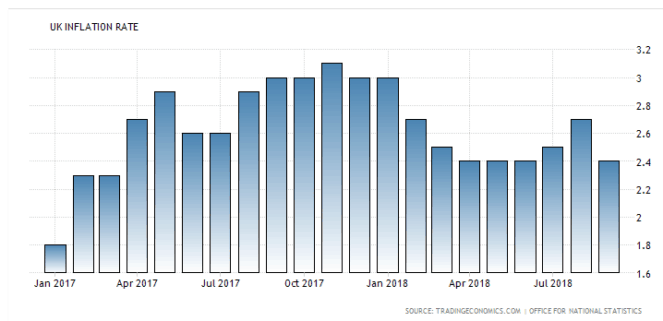
Clearly, inflation has been above 2% per year for a while now. In other words, the prices of goods and services are rising by more than 2% every year. What that means is that any money earning 1.5% per year is actually losing purchasing power over time.

To beat inflation, your money has to grow at a rate that’s higher than it. That’s why, here at The Motley Fool, we’re big fans of investing in the stock market, because, over the long run, stocks tend to produce returns of around 7-10% per year, which is far higher than inflation. Cash savings are important, sure, but for long-term investing, stocks are usually a better bet.


More on Investing Articles

Portrait of elderly man wearing white denim shirt and glasses looking up with hand on chin. Thoughtful senior entrepreneur, studio shot against grey background.
Dividend Shares

This is the worst FTSE 100 share over 5 years. Should I sell it?

The worst-performing share in the FTSE 100 has lost two-thirds of its value in the past five years. I own…

Read more »

Arrow symbol glowing amid black arrow symbols on black background.
Investing Articles

Microsoft’s share price is storming back and it’s not too late to consider buying

Microsoft’s share price has jumped 20% in the blink of an eye. Edward Sheldon believes it can go higher, however,…

Read more »

British pound data
Investing Articles

What’s your plan for a stock market crash?

The stock market might be flying, but the time to think about a crash is before it happens. Fortunately, it…

Read more »

Investing Articles

Will SpaceX stock explode on entry?

The SpaceX IPO is just days away and excitement about the stock has gone into orbit. Harvey Jones is urging…

Read more »

Investor looking at stock graph on a tablet with their finger hovering over the Buy button
Investing Articles

CMC Markets: a FTSE dividend star worth considering for an ISA or SIPP?

This FTSE dividend stock doesn’t get a lot of attention. But things are starting to change as it’s posting brilliant…

Read more »

British coins and bank notes scattered on a surface
Investing Articles

Income investors love insurance stocks. Here’s my top pick from the FTSE 100

High dividend yields often make insurance stocks attractive for passive income investors. But which is Stephen Wright’s top choice?

Read more »

Young Asian man drinking coffee at home and looking at his phone
Investing Articles

See what £10,000 invested in dismal Diageo shares just 1 week ago is worth today

Diageo shares are all hangover and no fizz, says Harvey Jones. How long must investors wait before the FTSE 100…

Read more »

Rear view image depicting a senior man in his 70s sitting on a bench leading down to the iconic Seven Sisters cliffs on the coastline of East Sussex, UK. The man is wearing casual clothing - blue denim jeans, a red checked shirt, navy blue gilet. The man is having a rest from hiking and his hiking pole is leaning up against the bench.
Investing Articles

Up 1,146%! 7 things I’ve learned from the stunning Rolls-Royce share price comeback 

Harvey Jones has made a fair bit of money out of the booming Rolls-Royce share price, but he's also learned…

Read more »