Every investor needs a plan for a stock market crash as the next one could be just around the corner.
Exactly when it will happen is impossible to predict. But that doesn’t mean it’s something to be afraid of.
What causes the next crash?
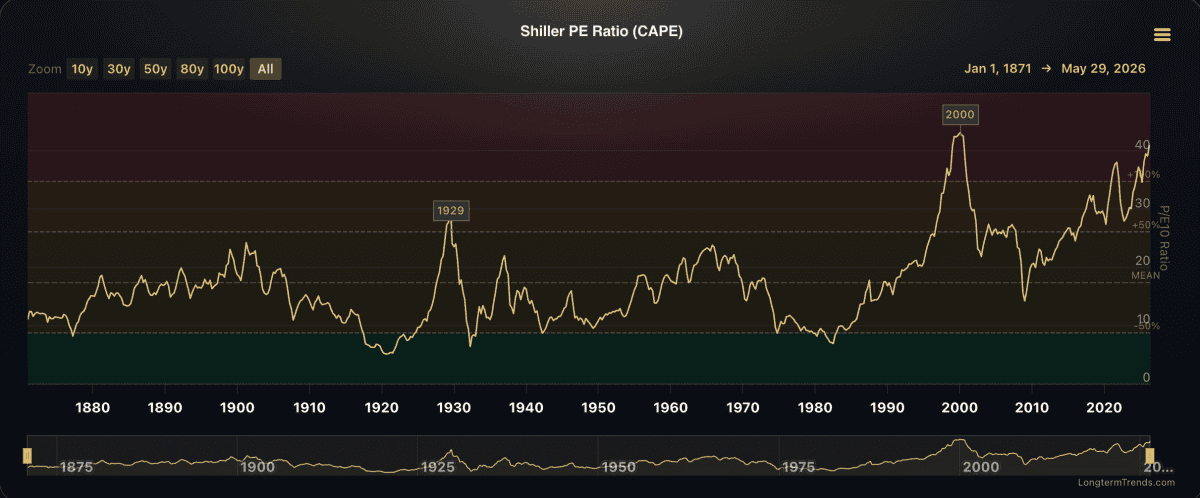
Investors looking for signs of the next crash have a lot to pay attention to. To start with, valuations are pretty high at the moment.
Source: Longtermtrends
That doesn’t mean stocks are expensive. But it does mean investor sentiment about future earnings growth is pretty positive.
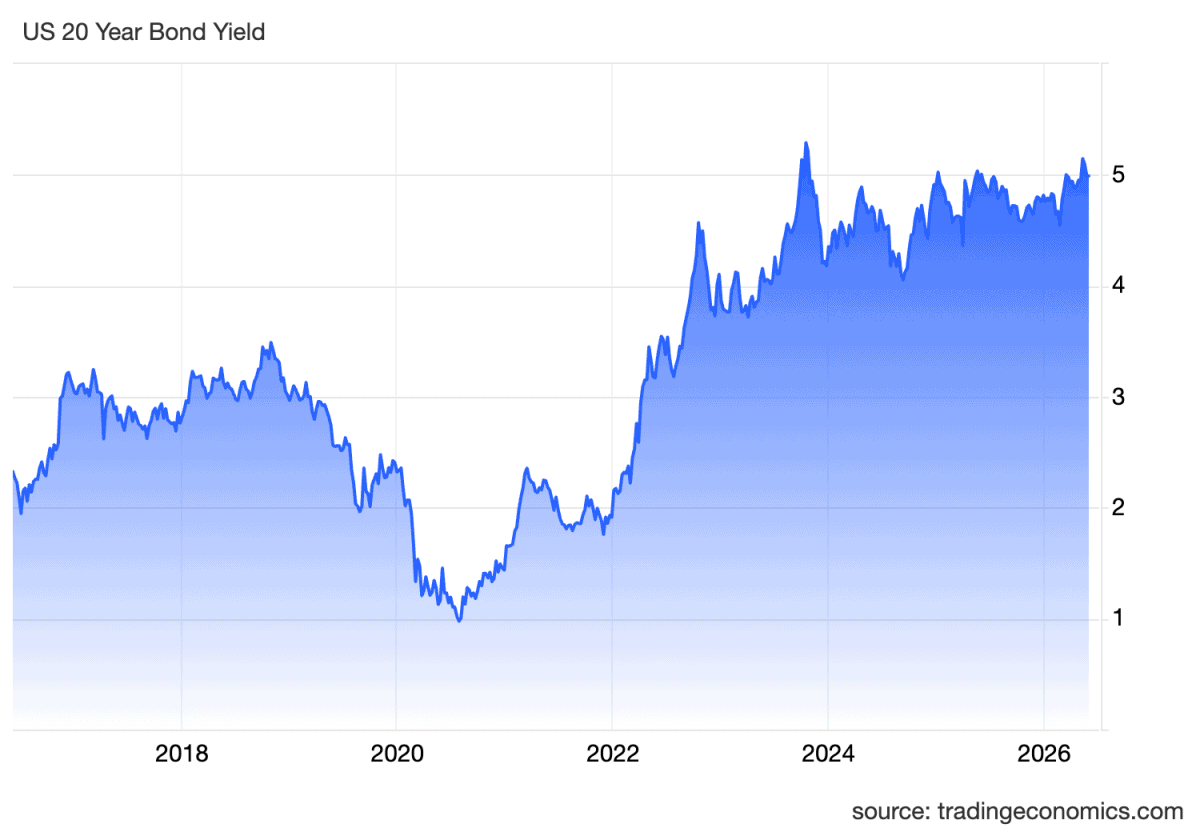
At the same time, bond yields have been moving higher. Ordinarily, that also puts downward pressure on equity valuations.
Source: Trading Economics
Higher bond yields often mean investors demand better returns from stocks. That means share prices have to go lower.
So far, however, this hasn’t really happened. And when you look at the stock market, there’s a pretty clear reason why.
Who cares about bond yields?
The current theme of the stock market is – of course – artificial intelligence (AI). Microsoft (NASADAQ:MSFT) and others have huge plans to build data centres.
As a result, earnings are surging across the supply chain. That’s leading to higher share prices and a rising stock market.
The question is what stops it. And while I don’t know the answer to this, I don’t think it’s a rise in bond yields.
Microsoft’s credit rating is AAA. So I don’t think a rise in borrowing costs is going to cause it to stop building data centres.
The thing to look for is a sign of slowing demand. And some indications of this might be starting to come into view.
What could crash the market?
Data centre spending is driving the market higher. But that continuing depends on companies seeing a return on their investments.
Part of that involves AI creating more value than it costs. Recently, however, there are signs that this isn’t obviously the case.
Microsoft is reported to have started cancelling its Claude Code subscriptions. The reason is that they’re too expensive.
If others feel the same way, AI spending could fall. And that’s a risk for the stock market and Microsoft’s data centre investments.
The big warning sign I’m looking for is that backlogs are starting to clear. So I’ll be watching closely when Microsoft reports in July.
What’s your strategy?
Knowing what’s coming is one thing, preparing for it is another. But what can investors do to be as ready as possible?
Hedging is one strategy. But it’s a complicated approach that often depends on getting the timing right, which is much easier said than done.
Alternatively, investors might just do nothing. The stock market has always found ways to recover sooner or later.
More importantly, the best days to buy shares are often immediately after a crash. And investors don’t want to miss these.
The key is being able to hold on. And the main thing that means is avoiding using debt when it comes to buying stocks.
Crash protection
My plan for dealing with a stock market crash is simple. I can cope with the worst days as long as I don’t miss the best ones.
I see slowing data centre growth as the biggest risk to share prices right now. But Microsoft is one of the names on my long-term buy list.
Should you invest £5,000 in Microsoft right now?
When investing expert Mark Rogers and his team have a stock tip, it can pay to listen. After all, the flagship Twelfth Magpie Share Advisor newsletter he has run for nearly a decade has provided thousands of paying members with top stock recommendations from the UK and US markets.
And right now, Mark thinks there are 6 standout stocks that investors should consider buying. Want to see if Microsoft made the list?
Stephen Wright owns shares in Microsoft.