We have some exciting news to share! The Motley Fool UK has now become The Twelfth Magpie -- an independent, UK-owned company, led by our long-serving UK management team — Mark Rogers, Chris Nials and Heather Adlington. In practical terms, it’s the same team you know, now fully focused on serving our UK readers and members.

Just as importantly, our approach remains unchanged: long-term, jargon-free, and on your side. This site is our new home, and there will be extra tweaks made across the coming few days as we settle in. So if anything looks a little off, please bear with us!

The content of this article was relevant at the time of publishing. Circumstances change continuously and caution should therefore be exercised when relying upon any content contained within this article.

Will debt become toxic in 2017?

Should you avoid highly indebted companies at all costs?

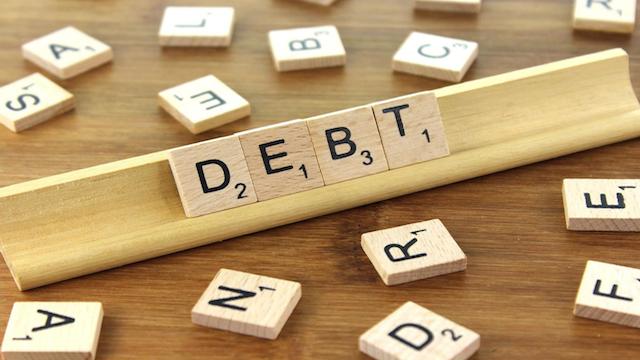
debt scrabble piece spelling

You’re reading a free article with opinions that may differ from The Twelfth Magpie’s Premium Investing Services. Become a member today to get instant access to our top analyst recommendations, in-depth research, investing resources, and more. Learn more, and get a free 'Best Buy Now' stock!.

Across much of the global economy, low interest rates have led to a rise in debt levels in recent years. In fact, no major economy in the world has decreased its debt to GDP ratio since 2007. This shows that while debt has been successfully used to avert a global depression following the global financial crisis, the world is now increasingly reliant upon borrowed money in order to grow and even function. Looking ahead, this could prove to be a major problem.

Of course, high debt levels are sustainable as long as they remain affordable. As mentioned, low interest rates have made this possible in recent years. However, across major economies there is a more hawkish feeling among policymakers. For example, in the US the Federal Reserve is expected to raise interest rates in December. Further rate rises are very much on the cards following Donald Trump’s election victory, since he is expected to pursue fiscal policies which are highly inflationary.

Should you buy Rolls Royce shares today?

Before you decide, please take a moment to review this report first. Despite ongoing uncertainties from US tariffs to global conflicts, Mark Rogers and his team believe many UK shares still trade at substantial discounts, offering savvy investors plenty of potential opportunities to learn about.

That’s why this could be an ideal time to secure this valuable research – Mark’s analysts have scoured the markets to reveal 5 of his favourite long-term ‘Buys’. Please, don’t make any big decisions before seeing them.

Not only does this cause a problem for companies listed in the US, it could cause challenges for non-US companies which have their debt denominated in US dollars. That’s because a rising US interest rate is likely to cause an appreciation in the value of the US dollar. This would make it more difficult for companies based outside of the US and which report in a non-US currency to make repayments in US dollars. As such, their financial sustainability may be called into question – especially if their interest coverage ratios are relatively low.

Therefore, it makes sense for Foolish investors to invest in companies which have manageable levels of debt. ‘Manageable’ refers to not only while interest rate rates are low, but also if they increased by 100, 200 or even 300 basis points over the medium term. If global inflation is positively catalysed by Trumponomics, then significantly higher interest rates in the US and elsewhere could be necessary.

In addition, the profitability of stocks across the globe could come under pressure in the short run, which may make current debt levels less affordable. Trump’s economic policies represent major change and could cause investment in projects across the globe as well as consumer spending levels to come under pressure. This may hurt the profitability of companies across the world and lead to a narrowing of their headroom when making interest payments on their debt.

Clearly, the vast majority of companies have debt, so avoiding it completely is unlikely to be a realistic option for Foolish investors. However, focusing on a company’s interest coverage, cash flow reliability and the strength of its balance sheet could become even more crucial in 2017 and beyond. Borrowing has always been a risky business. But in 2017 its potential problems could present themselves for the first time in a decade.


More on Investing Articles

Happy parents playing with little kids riding in box
Dividend Shares

How much is needed in a Stocks and Shares ISA to target a £1,370 monthly passive income?

Want to retire early and live off passive income? James Beard explains how someone could aim to do this with…

Read more »

Rolls-Royce Hydrogen Test Rig at Loughborough University
Investing Articles

Here’s how nuclear energy could reignite a fire under Rolls-Royce shares

Mark Hartley weighs up the long-term dividend potential of Rolls-Royce shares and how its SMR division could help drive growth.

Read more »

A rear view of a female in a bright yellow coat walking along the historic street known as The Shambles in York, UK which is a popular tourist destination in this Yorkshire city.
Investing Articles

Here’s how much is needed in an ISA to earn £46,918 of passive income a year

Mark Hartley takes a look at the kind of investment power needed to bring in enough passive income for a…

Read more »

Investing Articles

3 beaten-down FTSE 100 shares to consider buying and holding for a decade

Harvey Jones says the real rewards of investing in FTSE 100 shares come over the long term. He thinks these…

Read more »

Three signposts pointing in different directions, with 'Buy' 'Sell' and 'Hold' on
Investing Articles

At 237.8%, the stock market total value-to-GDP ratio is way too high. Here’s what I’m doing.

With the stock market looking more overvalued than at any other time in history, Mark Hartley carefully considers how UK…

Read more »

Chalkboard representation of risk versus reward on a pair of scales
Investing Articles

Greggs shares may look cheap – but they expose a classic investing dilemma!

Greggs shares seem to be going nowhere fast. This shareholder reckons it could be an example of a classic stock…

Read more »

Investing Articles

Here’s how long it could take to go from zero to a £1m Stocks and Shares ISA

Ben McPoland sees this dividend-paying ETF as a solid contender for inclusion in a diversified Stocks and Shares ISA today.

Read more »

Business manager working at a pub doing the accountancy and some paperwork using a laptop computer
Investing Articles

Down 33%, is there a once-in-a-decade chance to buy this quality FTSE 100 stock?

This FTSE 100 stock's been written off as a loser in the age of artificial intelligence. But what if the…

Read more »