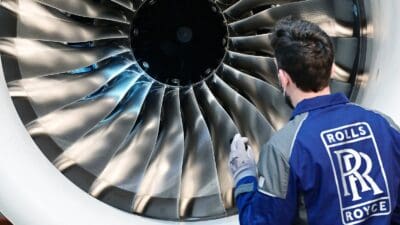
Among all the FTSE shares available to UK investors today, Rolls-Royce has arguably been the standout story of the decade. Under CEO Tufan Erginbilgiç, the business has been transformed, and shareholders who bought at the lows have made extraordinary returns.
But with Rolls-Royce now trading on a premium valuation and most of the easy gains priced in, there may be far more interesting opportunities to explore elsewhere. And Goodwin (LSE:GDWN) could be one of them.
A 143 year-old engineering powerhouse
Founded in 1883 and still family-controlled, Goodwin’s a UK engineering group with two divisions:
- Mechanical Engineering – makes specialist valves, pumps, radar systems, and castings for defence, nuclear, naval, and LNG markets.
- Refractory Engineering – supplies precision powders, waxes, and materials used in aerospace and jewellery casting.
It’s unglamorous, highly technical, and almost completely off the radar of retail investors. And that’s precisely what makes it interesting.
For its 2026 fiscal year (ending in April), the company is on track to double its trading profit from £35.5m to £71m, having already doubled its first-half earnings on the back of a 27.4% surge in top-line revenues and expanding profit margins.
But what really makes Goodwin fascinating is its order book. On paper, the firm has £288m of contracted projects on the books. In practice, due to the procurement process of the defence and energy sectors, the company has an enormous pipeline of projects that it’s already involved in that don’t show up in the financials yet. And the market seems to be largely ignoring this ‘shadow’ order book.
Pairing that with the unmistakable structural tailwinds across the defence and energy sectors, Goodwin appears to be sitting at the heart of these evolving industries almost entirely unnoticed by most investors. And it’s why I’ve already added this engineering giant to my portfolio.
However, that doesn’t mean there aren’t any risks…
What to watch
The group’s March trading update was a sobering reminder that winning tenders on new contracts is never guaranteed. The firm lost a €18m coastal radar contract for Estonia, as well as a tender for the Sellafield project worth over £45m. It was certainly a surprise announcement and not a pleasant one, which investors promptly responded to with an aggressive fire sale.
This visceral reaction seems a little overblown, and it’s why I took advantage of the volatility to invest. However, if more tenders are lost, it could uncover a much deeper problem rather than the one-off issue I suspected.
There’s also the live concern of geopolitical disruption to consider as well. Several large Middle East LNG valve contracts have been delayed due to Gulf tensions creating revenue timing risks. And at the same time, the surge in precious metal prices like gold has significantly dampened demand for jewellery casting powder, negatively impacting Goodwin’s Refractory division.
So what should investors make of all this?
What’s the verdict?
The tender losses are disappointing. But even without these contracts, management’s reiterated its full-year guidance, indicating that the business remains firmly on track.
So with a more attractive share price now on offer, and plenty of long-term growth potential, I think growth investors might want to consider taking a closer look at this FTSE stock.
Should you invest £5,000 in Goodwin Plc right now?
When investing expert Mark Rogers and his team have a stock tip, it can pay to listen. After all, the flagship Twelfth Magpie Share Advisor newsletter he has run for nearly a decade has provided thousands of paying members with top stock recommendations from the UK and US markets.
And right now, Mark thinks there are 6 standout stocks that investors should consider buying. Want to see if Goodwin Plc made the list?
Zaven Boyrazian owns shares in Goodwin.