Dividend stocks can be a powerful tool for building a second income. But rather than chasing the highest yields available today, I prefer companies with the ability to grow both earnings and dividends over many years.
For investors targeting £1,000 a month in extra income, here are two dividend stocks for investors to consider for the long term.
Building a growing second income
Aviva (LSE: AV.) remains one of my favourite FTSE 100 dividend stocks. While a forward yield of 6.7% is attractive, what stands out to me is the company’s ability to grow shareholder payouts over time.
As the chart shows, the dividend has increased at a healthy compound annual growth rate over the past five years. For investors hoping to build a second income, that matters because a growing dividend can help income keep pace with inflation while reducing reliance on continually adding new capital.
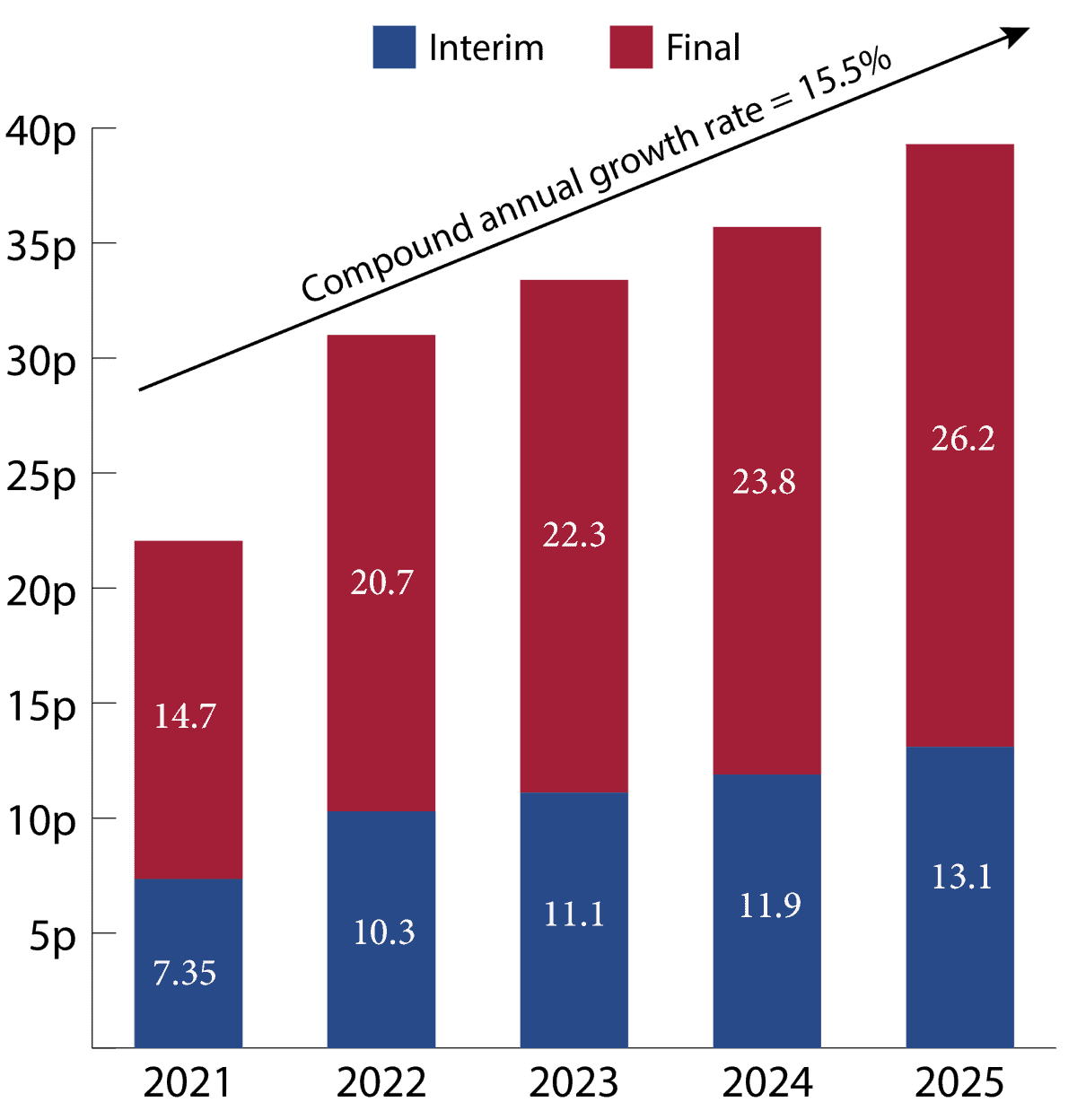
Chart generated by author
The business itself also appears well positioned to support future dividend growth. Although insurance remains at the heart of operations, Aviva has strengthened its presence in wealth and retirement markets, creating a more diversified earnings base. These areas benefit from long-term demographic trends, including growing pension savings and an ageing population.
The company also continues to generate strong levels of cash, allowing it to reward shareholders through both dividends and share buybacks. For me, that combination of income today and the potential for rising payouts tomorrow makes it an attractive option for long-term income investors.
Of course, there are risks. The integration of Direct Line will need to be executed successfully, while weaker financial markets could weigh on wealth-related earnings. Insurance profitability can also fluctuate as claims costs and competitive pressures change.
Even so, I believe Aviva has many of the characteristics income investors should look for when building a portfolio designed to generate a meaningful second income over time.
Different play
Aviva focuses on income today. RELX (LSE: REL) is different. It offers a lower yield, but a long track record of earnings growth and rising dividends that can compound over time.
The group continues to deliver steady underlying growth. FY25 results saw revenue up 7%, operating profit up 9%, and earnings per share up 10%. But the more important story sits beneath those figures: increasingly embedded analytics and decision tools that are becoming central to customer workflows.
Across all its divisions, growth is being driven by higher-value data, AI-enabled tools, and expanding platform adoption. In Legal in particular, double-digit growth is being supported by AI-powered workflow products such as Lexis+ AI, which deepen integration and increase switching costs over time.
This matters for income investors because it shifts RELX towards a more predictable, recurring revenue model. Pricing power and retention then support long-term dividend progression, rather than relying on a high starting yield.
The main risk is valuation. Much of RELX’s quality and stability is already well recognised by the market. This means future returns are likely to depend more on sustained execution than multiple expansion. A slowdown in professional end-market activity could also temper growth.
RELX is not a traditional income stock. But it is a dividend compounder, and that is often what drives more reliable second income streams over time. See the links below for further ideas.
Should you invest £5,000 in Aviva Plc right now?
When investing expert Mark Rogers and his team have a stock tip, it can pay to listen. After all, the flagship Twelfth Magpie Share Advisor newsletter he has run for nearly a decade has provided thousands of paying members with top stock recommendations from the UK and US markets.
And right now, Mark thinks there are 6 standout stocks that investors should consider buying. Want to see if Aviva Plc made the list?
Andrew Mackie owns shares in Aviva and Relx.