We have some exciting news to share! The Motley Fool UK has now become The Twelfth Magpie -- an independent, UK-owned company, led by our long-serving UK management team — Mark Rogers, Chris Nials and Heather Adlington. In practical terms, it’s the same team you know, now fully focused on serving our UK readers and members.

Just as importantly, our approach remains unchanged: long-term, jargon-free, and on your side. This site is our new home, and there will be extra tweaks made across the coming few days as we settle in. So if anything looks a little off, please bear with us!

The content of this article was relevant at the time of publishing. Circumstances change continuously and caution should therefore be exercised when relying upon any content contained within this article.

How much should an investor considering putting in the stock market to return £250 a week?

Mark Hartley looks at the various metrics investors typically use to calculate how much income they could earn on the stock market.

| More on:
Businessman with tablet, waiting at the train station platform

Image source: Getty Images

You’re reading a free article with opinions that may differ from The Twelfth Magpie’s Premium Investing Services. Become a member today to get instant access to our top analyst recommendations, in-depth research, investing resources, and more. Learn more, and get a free 'Best Buy Now' stock!.

Investors often try calculating their passive income potential when investing in the stock market. This is a key part of formulating an income-based strategy, as the outcome relies on meeting certain criteria. Notably, it’s important to know how much to invest when aiming to achieve a specific return

For example, an investor wants to earn an extra £250 a week to supplement their current income. That equates to a return of approximately £1,000 a month (or £12,000 a year). How much would they need to invest to return £12,000 of income per year?

Should you buy Investec Group shares today?

Before you decide, please take a moment to review this report first. Despite ongoing uncertainties from US tariffs to global conflicts, Mark Rogers and his team believe many UK shares still trade at substantial discounts, offering savvy investors plenty of potential opportunities to learn about.

That’s why this could be an ideal time to secure this valuable research – Mark’s analysts have scoured the markets to reveal 5 of his favourite long-term ‘Buys’. Please, don’t make any big decisions before seeing them.

Formulating a strategy

An investment provides returns through both capital appreciation and dividends. Income investors typically prefer dividends due to the regular payments they deliver.

The best dividend stocks for passive income are those with a long track record of growth. This reduces the risk of a dividend cut in the near future.

A high yield is also important — but not so high that it’s unsustainable. Risk tolerance and diversification are also key criteria to consider. A less-diversified portfolio may provide higher returns at the risk of greater losses.

For example, diversifying into volatile US tech stocks can be risky. However, the opportunity for growth is good. Alternatively, low-volatility consumer goods or healthcare stocks are less risky but slow-growing.

How much to invest

Imagine a portfolio with a 7% average yield and 3% annualised growth. With £120,000 invested, that could return approximately £12k per year.

That amount could be reached by investing £200 a month for 20 years. It would require reinvesting the dividends to compound the returns so the investment grows exponentially.

By upping the monthly contribution to £300, the time could be reduced to 15 years. And an investor with already £20,000 in savings could further reduce it to only 11 years. Of course none of those returns are guaranteed.

What kind of stock meets those criteria?

Ideally, the portfolio should have 10 to 20 stocks with yields between 5% and 9%. They should span a range of different industries and geographical regions.

One example I think is worth considering is the FTSE 250 stock Investec (LSE: INVP). The international wealth management group is one of the largest companies on the index, with a market cap of £4.66bn. Larger-cap stocks tend to be less volatile.

It maintains a fairly stable yield between 5% and 7%, which is higher than average. Although it has made two cuts in the past 20 years, dividends have grown at a rate of 6.9%.
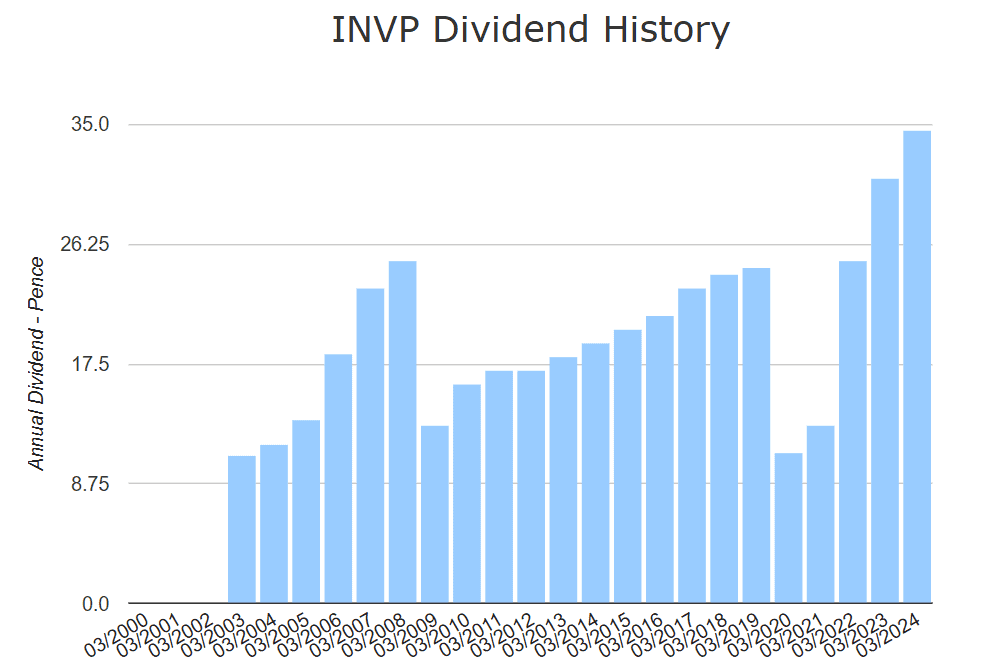
Investec dividend history
Screenshot from DividendData.co.uk

As an investment firm, Investec is at higher risk from macroeconomic factors that lead to market volatility. These include interest rate changes, geopolitical conflicts and supply and demand issues. Profits may also suffer if a company it invests in defaults on its debt or falls into administration.

So far, it appears to have made good investment decisions. Analysts on average expect a 12-month price of 653p, 31% higher than today.
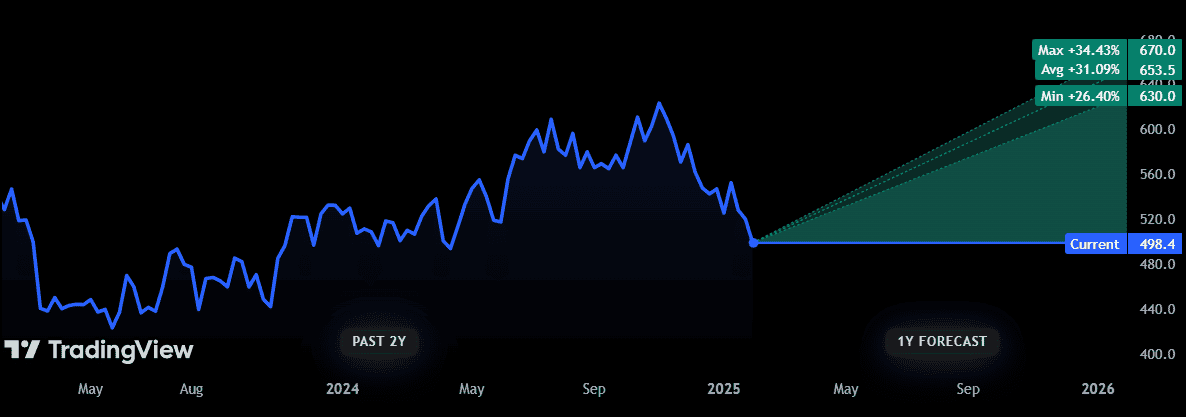
Investec stock market chart
Created on TradingView.com

The share price has increased at an annualised rate of 7.3% over the past decade. That makes it an attractive addition to an income portfolio, as dividend stocks typically have lower price growth. 

It also has good ratios, with a price of only 6.7 times earnings and a price-to-sales (P/S) ratio of 0.87. 

Mark Hartley has no position in any of the shares mentioned. The Motley Fool UK has no position in any of the shares mentioned. Views expressed on the companies mentioned in this article are those of the writer and therefore may differ from the official recommendations we make in our subscription services such as Share Advisor, Hidden Winners and Pro. Here at The Motley Fool we believe that considering a diverse range of insights makes us better investors.

More on Investing Articles

Happy parents playing with little kids riding in box
Dividend Shares

How much is needed in a Stocks and Shares ISA to target a £1,370 monthly passive income?

Want to retire early and live off passive income? James Beard explains how someone could aim to do this with…

Read more »

Rolls-Royce Hydrogen Test Rig at Loughborough University
Investing Articles

Here’s how nuclear energy could reignite a fire under Rolls-Royce shares

Mark Hartley weighs up the long-term dividend potential of Rolls-Royce shares and how its SMR division could help drive growth.

Read more »

A rear view of a female in a bright yellow coat walking along the historic street known as The Shambles in York, UK which is a popular tourist destination in this Yorkshire city.
Investing Articles

Here’s how much is needed in an ISA to earn £46,918 of passive income a year

Mark Hartley takes a look at the kind of investment power needed to bring in enough passive income for a…

Read more »

Investing Articles

3 beaten-down FTSE 100 shares to consider buying and holding for a decade

Harvey Jones says the real rewards of investing in FTSE 100 shares come over the long term. He thinks these…

Read more »

Three signposts pointing in different directions, with 'Buy' 'Sell' and 'Hold' on
Investing Articles

At 237.8%, the stock market total value-to-GDP ratio is way too high. Here’s what I’m doing.

With the stock market looking more overvalued than at any other time in history, Mark Hartley carefully considers how UK…

Read more »

Chalkboard representation of risk versus reward on a pair of scales
Investing Articles

Greggs shares may look cheap – but they expose a classic investing dilemma!

Greggs shares seem to be going nowhere fast. This shareholder reckons it could be an example of a classic stock…

Read more »

Investing Articles

Here’s how long it could take to go from zero to a £1m Stocks and Shares ISA

Ben McPoland sees this dividend-paying ETF as a solid contender for inclusion in a diversified Stocks and Shares ISA today.

Read more »

Business manager working at a pub doing the accountancy and some paperwork using a laptop computer
Investing Articles

Down 33%, is there a once-in-a-decade chance to buy this quality FTSE 100 stock?

This FTSE 100 stock's been written off as a loser in the age of artificial intelligence. But what if the…

Read more »