
We have some exciting news to share! The Motley Fool UK has now become The Twelfth Magpie -- an independent, UK-owned company, led by our long-serving UK management team — Mark Rogers, Chris Nials and Heather Adlington. In practical terms, it’s the same team you know, now fully focused on serving our UK readers and members.

Just as importantly, our approach remains unchanged: long-term, jargon-free, and on your side. This site is our new home, and there will be extra tweaks made across the coming few days as we settle in. So if anything looks a little off, please bear with us!

The content of this article was relevant at the time of publishing. Circumstances change continuously and caution should therefore be exercised when relying upon any content contained within this article.

Is it safe for me to invest in the S&P 500 today?

Should this Fool invest in the S&P 500? We’re in a bear market with many headwinds but the index has historically rewarded long-term investors.

Young woman smiling putting a coin inside piggy bank as savings for investment

Image source: Getty Images

You’re reading a free article with opinions that may differ from The Twelfth Magpie’s Premium Investing Services. Become a member today to get instant access to our top analyst recommendations, in-depth research, investing resources, and more. Learn more, and get a free 'Best Buy Now' stock!.

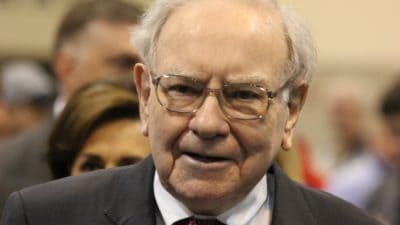
Warren Buffett swears by the inexpensive strategy of investing in low-cost index funds tracking the S&P 500. He encourages this type of investment over active funds in particular. That’s because index funds typically have lower fees and it’s difficult for fund managers to consistently outperform. Moreover, the S&P 500 has returned a historic annualised average return of 11.88% over the last 65 years through bull and bear markets.  

Buffett even put his money where his mouth is. He bet that the S&P 500 would outperform a portfolio of five active funds over a 10-year period from January 2008 to December 2017. Of course the Oracle of Omaha was correct. The five funds averaged a return of only 36.3% net of fees. Comparatively, the S&P 500 returned 125.8%.

Should you buy Rolls Royce shares today?

Before you decide, please take a moment to review this report first. Despite ongoing uncertainties from US tariffs to global conflicts, Mark Rogers and his team believe many UK shares still trade at substantial discounts, offering savvy investors plenty of potential opportunities to learn about.

That’s why this could be an ideal time to secure this valuable research – Mark’s analysts have scoured the markets to reveal 5 of his favourite long-term ‘Buys’. Please, don’t make any big decisions before seeing them.

The index’s recent performance isn’t so strong. In fact, the returns have been miserable in the last year. It’s down 18% in the last 12 months and 23% year to date. So is the S&P 500 still a safe investment for me?

Empires rise and fall

Today, US stocks make up over 60% of the global stock market. Some 17 of the largest 20 companies by market cap are American. Indeed, it’s difficult to imagine a world in the short-to-medium term where US equities aren’t so dominant. However, in the 1980s, it was Japanese stocks that dominated the investment landscape.

In 1989, Japan accounted for 45% of the global stock market. Then, as the asset bubble burst and monetary policy tightened, Japanese equities plunged over 80%. Over 30 years later, the Nikkei 225 stock index still hasn’t fully recovered. Japan makes up just 6% of the global stock market today. Could the S&P 500 suffer a similar fate to the Nikkei?

I don’t believe so. Yes, the US and Japan face similar challenges such as ageing demographics and increased global competition. However, the US has a more open economic system. This allows for faster population growth and the inflow of the best and brightest from around the world.

Patience is a virtue

Back to my original question of whether investing in the S&P 500 today is a safe strategy. Inflation and interest rates continue to rise. Meanwhile, there’s no end in sight for the war in Ukraine. I fear that we haven’t seen a bottom yet and the bear market could continue for months and even years.

That doesn’t discourage me from investing in the index however. The longer my horizon, the less risky my investment should be. Throughout history, saving regularly through difficult market periods has ultimately rewarded investors. A longer holding period also allows me to benefit from the magic of compounding. Assuming a 10% average annual return — lower than the historical average — I could double my money in around seven years. In 30 years, an investment of £100 a month at this 10% return would leave me with around £210,000. I think my future self would be very thankful for that!

I have to accept that weak returns could continue though and I might even lose money.

And even assuming I make money, the S&P 500 index isn’t an opportunity to ‘get rich quick’. Instead, decades of historical data suggests that regular investments in it and a long-term horizon is likely to reward me as a patient investor.

Views expressed in this article are those of the writer and therefore may differ from the official recommendations we make in our subscription services such as Share Advisor, Hidden Winners and Pro. Here at The Motley Fool we believe that considering a diverse range of insights makes us better investors.

More on Investing Articles

Young Caucasian man making doubtful face at camera
Investing Articles

What builds wealth faster: an ISA or a SIPP?

Christopher Ruane reckons a SIPP has some clear advantages over a Stocks and Shares ISA -- but also some potential…

Read more »

Warren Buffett at a Berkshire Hathaway AGM
Investing Articles

Here’s how Warren Buffett managed to turn $100 into $5,502,284

Warren Buffett's investment record may be exceptional -- but it's still explainable. Christopher Ruane's been learning moves from the great…

Read more »

Rolls-Royce's Pearl 10X engine series
Investing Articles

Could the Rolls-Royce share price hit £20 in 2026?

The Rolls-Royce share price has gained another 18% this year on the back of the company's strong earnings growth. Could…

Read more »

Close-up image depicting a woman in her 70s taking British bank notes from her colourful leather wallet.
Investing Articles

With a 6.5% yield, 10,000 shares of this FTSE 250 bank could deliver £3,530 of passive income this year!

Mark Hartley calculates the incredible passive income potential of one of his favourite FTSE 250 stocks: OSB Group. But is…

Read more »

High flying easyJet women bring daughters to work to inspire next generation of women in STEM
Investing Articles

Up 35% in a month! What’s going on with easyJet shares?

Following a rival takeover bid, easyJet shares are once again soaring – but what does it mean for investors? Mark…

Read more »

Trader on video call from his home office
Investing Articles

£10,000 into £24,000 in 5 years: could this FTSE 100 stock be the next Rolls-Royce?

Diploma's been one of the FTSE 100’s top stocks since joining the index in 2023. But is it a mistake…

Read more »

Tariffs and Global Economic Supply Chains
Investing Articles

America’s handing babies $1,000 for passive income — do UK parents need a plan B for the State Pension?

As the OECD warns that the triple lock protecting the State Pension is becoming unsustainable, here’s another passive income strategy…

Read more »

A mature woman help a senior woman out of a car as she takes her to the shops.
Investing Articles

£100k in savings? Here’s how to unlock up to a £6,600 second income overnight!

Even with UK shares at an all-time high, there are still magnificent yields on offer that can instantly unlock an…

Read more »