We have some exciting news to share! The Motley Fool UK has now become The Twelfth Magpie -- an independent, UK-owned company, led by our long-serving UK management team — Mark Rogers, Chris Nials and Heather Adlington. In practical terms, it’s the same team you know, now fully focused on serving our UK readers and members.

Just as importantly, our approach remains unchanged: long-term, jargon-free, and on your side. This site is our new home, and there will be extra tweaks made across the coming few days as we settle in. So if anything looks a little off, please bear with us!

The content of this article was relevant at the time of publishing. Circumstances change continuously and caution should therefore be exercised when relying upon any content contained within this article.

Three crucial lessons for all investors from the Archegos meltdown!

The sudden collapse of family office/hedge fund Archegos Capital caused global shockwaves. Here’s what went wrong. Don’t make the same three mistakes!

You’re reading a free article with opinions that may differ from The Twelfth Magpie’s Premium Investing Services. Become a member today to get instant access to our top analyst recommendations, in-depth research, investing resources, and more. Learn more, and get a free 'Best Buy Now' stock!.

In late March, shockwaves reverberated across the US stock market. By Friday, 26 March, several prominent American stocks had fallen suddenly and steeply. In days, tens of billions of dollars were wiped from valuations. As investors scrambled to explain this turmoil, they discovered the culprit: Archegos Capital Management.

Archegos blows up

Bill Hwang was a successful trader at Julian Robertson’s renowned hedge fund Tiger Management. When Tiger closed in 2000, Hwang started Tiger Asia Management (TAM). This hedge fund closed in 2012, after an insider-trading conviction. In 2013, Hwang launched Archegos, his family office. It was a quiet success, notably making enormous sums since March 2020. At his peak, Hwang may have been worth $15bn. Then, in one week, Archegos blew up. Following a fire sale of its assets, the fund may be left with very little or nothing at all. Here’s what went wrong, in three easy lessons for all investors.

Should you buy Rolls Royce shares today?

Before you decide, please take a moment to review this report first. Despite ongoing uncertainties from US tariffs to global conflicts, Mark Rogers and his team believe many UK shares still trade at substantial discounts, offering savvy investors plenty of potential opportunities to learn about.

That’s why this could be an ideal time to secure this valuable research – Mark’s analysts have scoured the markets to reveal 5 of his favourite long-term ‘Buys’. Please, don’t make any big decisions before seeing them.

A highly concentrated portfolio…

To maximise returns, Hwang ran a highly concentrated portfolio. Using financial derivatives bought from investment banks, he held large stakes in a few companies. These included leading US media businesses, plus several US-listed Chinese groups. When ViacomCBS shares started sliding on Tuesday, 23 March, they quickly went into freefall. They collapsed from over $100 to $45, crashing by more than half (55%) in four days. This slashed tens of billions of dollars from the group’s market value.

With Archegos being one of ViacomCBS’s biggest shareholders, lenders demanded more collateral to support this and other losing bets. When traders fail to deliver collateral, they get a ‘margin call’ (an immediate demand to pay). When Archegos failed to meet margin calls, this triggered a massive fire sale. Banks sold huge chunks of the Archegos portfolio at big discounts in large ‘block trades’. Very quickly, Archegos racked up losses of many tens of billions of dollars in this forcible liquidation.

…Using too much leverage…

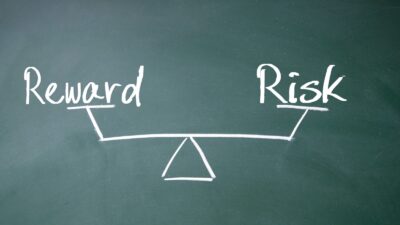
The second problem was Archegos used far, far too much leverage. Leverage involves using borrowed money or financial derivatives to magnify gains (and losses) from trades. I always say leverage is a double-edged sword, because it can harm as often as it helps. Hwang was said to be leveraged 5:1. Thus, for every $1 of assets, he took on $5 of risk. In this scenario, should a portfolio’s value fall by a fifth (20%), then it gets completely wiped out. It was this frightening leverage that set fire to Archegos, sending it up in smoke. As I warn: “Leverage is your best friend, until it’s your worst enemy.”

…Put Archegos in a liquidity trap

The third problem follows on from the first two mistakes. When running a highly concentrated, aggressively leveraged portfolio, it can be like a lobster crawling into a lobster pot. It’s easy to get into, but incredibly difficult to get out of. When forced to sell large shareholdings in a hurry, an investor gets a reduced price far below prevailing market rates. When caught in a liquidity trap, being a distressed seller means losing an arm and a leg.

Those are my three lessons from this debacle. But it’s so easy to avoid these problems. 1) I’d keep my portfolio highly diversified by spreading my eggs across many baskets. 2) I wouldn’t use leverage because I don’t like getting torched. 3) I wouldn’t take such large positions that I’d get caught in a liquidity trap!

Views expressed on the companies mentioned in this article are those of the writer and therefore may differ from the official recommendations we make in our subscription services, such as Share Advisor, Hidden Winners and Pro. Here at The Motley Fool, we believe that considering a diverse range of insights makes us better investors.

More on Investing Articles

Young female couple boarding their plane at the airport to go on holiday.
Investing Articles

Can the Rolls-Royce share price reach £15.97 by the end of August?

The Rolls-Royce share price has had a solid run in the last year. Muhammad Cheema takes a look at whether…

Read more »

Santa Clara offices of NVIDIA
Investing Articles

Up 1,200% in 5 years, here’s why Nvidia could still be a brilliant value stock

An exciting new announcement that could reshape the PC industry has just pushed Nvidia stock... well, just about nowhere really.

Read more »

House models and one with REIT - standing for real estate investment trust - written on it.
Investing Articles

How investing £4.50 a day could set you on the way to a £1,505 monthly second income

How can UK stocks with high dividend yields help investors earn a meaningful second income from the price of a…

Read more »

Investing Articles

Up 103% with a P/E of 261 — is this FTSE 100 stock still worth buying?

One FTSE 100 stock is quietly moving higher while most investors are still looking elsewhere — is the market missing…

Read more »

Concept of two young professional men looking at a screen in a technological data centre
Investing Articles

The smart money thinks AI stocks look risky — but is there still a chance to buy?

According to fund managers, the AI trade is getting crowded. But they still seem to think it’s the place to…

Read more »

Man putting his card into an ATM machine while his son sits in a stroller beside him.
Investing Articles

Barclays shares are 11% below their 52-week high. Could they be a bit of a bargain to consider?

Overpriced or one of the FTSE 100’s hidden gems? James Beard takes a closer look at how the market is…

Read more »

Stack of one pound coins falling over
Investing Articles

Down 65% but yielding 6.7% – is this beaten-down UK stock now a generational bargain?

Harvey Jones says this UK stock is one of the worst FTSE 100 performers but there are sound reasons to…

Read more »

Portrait of elderly man wearing white denim shirt and glasses looking up with hand on chin. Thoughtful senior entrepreneur, studio shot against grey background.
Investing Articles

Is this FTSE stock really 46% undervalued?

Analysts reckon this FTSE stock should be worth nearly 50% more. James Beard considers why there’s so much positivity surrounding…

Read more »