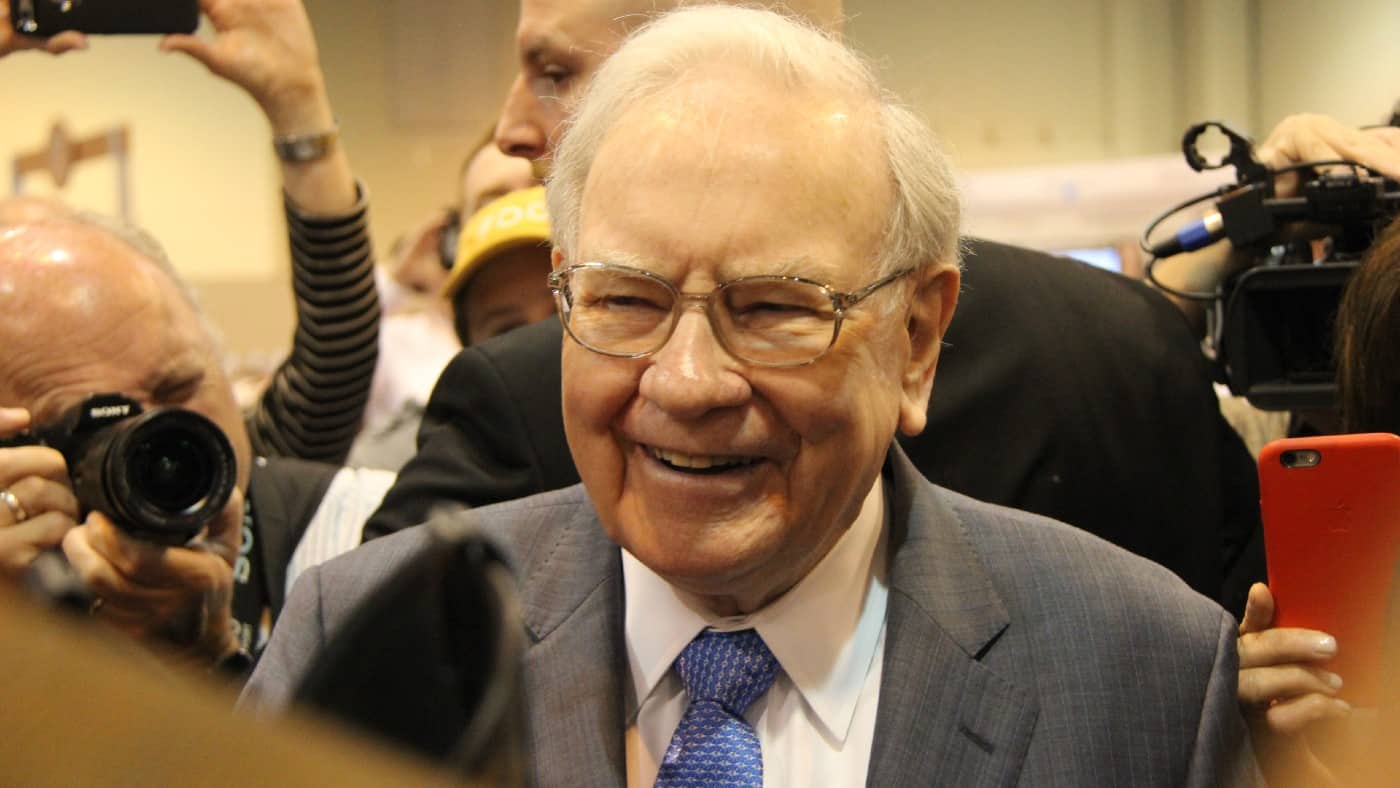
Warren Buffett may be one of the wealthiest people alive today, but here’s a fact most people overlook: he made roughly 97% of his fortune after turning 50.
So for anyone reading this at 50 with little saved, the most important takeaway is that even when starting later in life, it’s never too late to start building pension wealth. And by making the right moves today, investors could end up with £661k by the time retirement comes knocking.
Here’s how.
How Buffett builds wealth
The simplest way to start investing for retirement is with a passive index tracker. Fun fact: assuming that the stock market continues to deliver its 8% average annualised return over the next 17 years, a 50-year-old today could retire with £431,797 if they drip feed £1,000 in each month.
But what if instead of relying on an index fund, investors follow Buffett’s footsteps and pick stocks directly instead?
Since the 1960s, the ‘Oracle of Omaha’ has delivered a 19.9% annualised return across his investment portfolio through the Berkshire Hathaway investment vehicle. To maintain a near-20% annual return for just over 60 years is truly exceptional. But the good news is, investors today don’t need to match these gargantuan gains to unlock game-changing returns.
Even if a custom Buffett-inspired portfolio only mustered a 12% annualised return, investing £1,000 each month would steadily compound into £661,308 by this time in 2043.
So how does Buffett actually pick stocks?
Following Buffett’s playbook
There are three things the billionaire investor looks for:
- A business he genuinely understands.
- A durable competitive advantage that protects the company’s profits from competitors.
- A sensible price.
In other words, Buffett sticks to a boring but dependable strategy. He’s not looking for complex or fashionable businesses, he’s looking for simple, predictable ones that will still be thriving in 10 or 20 years. And one example from the Berkshire portfolio which illustrates all three principles is American Express (NYSE:AXP).
The company operates a closed-loop network of both cardholders and merchants, creating a flywheel of data, rewards, and brand loyalty that’s extraordinarily difficult to replicate. And this advantage continues to bleed into the group’s latest results.
Across the first quarter of 2026, revenue rose 11% to $18.9bn, earnings per share jumped 18% to $4.28, and card member spending grew 9% – the strongest quarterly growth rate in three years.
So what’s the catch? Expenses rose 11% in the same quarter, driven by higher customer engagement and marketing costs. As such, management decided to keep full-year guidance unchanged even after outperforming during the latest period.
In other words, management’s anticipating a potential slowdown later this year. And given the group’s significant sensitivity to consumer spending slowdowns, that seems a prudent decision in the context of a rapidly evolving macroeconomic environment.
The bottom line
Starting late isn’t a barrier to building serious retirement wealth, especially when following a proven stock-picking strategy like the Buffett method.
As for American Express, the company continues to be a textbook example of the sort of business that made Buffett so very wealthy. So while it may not be the flashiest idea in the market today, patient investors looking to build a sustainable retirement pot may nevertheless want to take a closer look.
Should you invest £5,000 in American Express right now?
When investing expert Mark Rogers and his team have a stock tip, it can pay to listen. After all, the flagship Twelfth Magpie Share Advisor newsletter he has run for nearly a decade has provided thousands of paying members with top stock recommendations from the UK and US markets.
And right now, Mark thinks there are 6 standout stocks that investors should consider buying. Want to see if American Express made the list?
Zaven Boyrazian does not hold any positions in the companies mentioned.