We’ve now (17 June) had three full days of trading in SpaceX — Space Exploration Technologies (NASDAQ:SPCX) — shares. And given that the stock’s changing hands for 49.5% more than the IPO price, valuing the company at a cool $2.66trn, I think it’s fair to say that the listing’s been a huge success.
But what does this tell us about stock market valuations? Let’s see.
Reaching new heights
The first thing to note is that the valuation rule book (if there were such a thing) doesn’t apply here!
Why?
Well, a look at SpaceX’s 2025 numbers reveals that it isn’t profitable, and that it’s valued at an astonishing 142 times revenue.
Apply this to, for example, Rolls-Royce Holdings (LSE:RR.) and the UK company would be worth 24 times more than it is today!
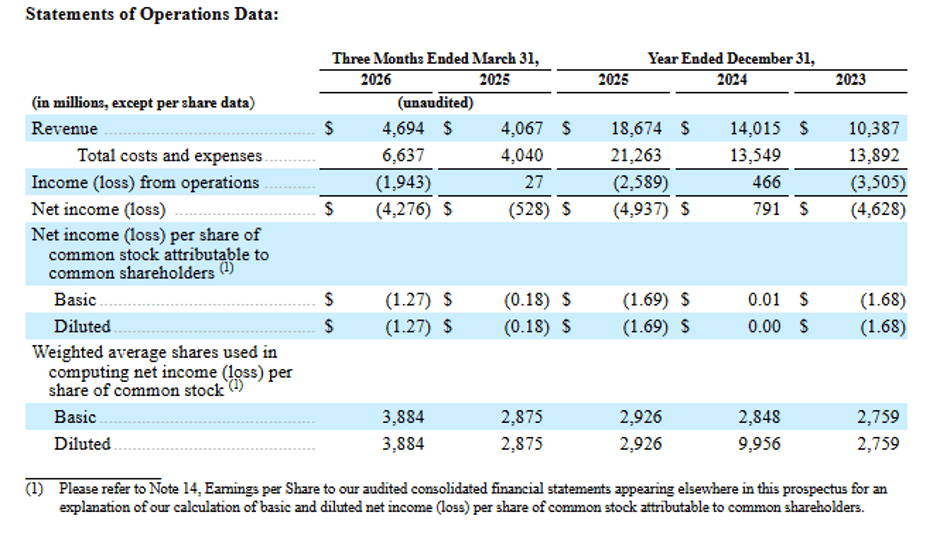
It’s a similar story when it comes to their balance sheets.
At 31 March 2026, SpaceX had an accounting value of $34.5bn, giving it a price-to-book ratio of 77. If it was treated the same, Rolls-Royce’s shares would be changing hands for 82% more (£25.37).
But I don’t think we should be surprised by this. Elon Musk’s businesses are treated differently to all others. Just look at Tesla. Today, it’s valued at 364 times historic earnings. Rolls-Royce’s multiple is 47.
What does this tell us?
Of course, we are comparing companies in different sectors here. Also, valuations should really be an assessment of future potential. Judgement is, therefore, required.
And in my opinion, Rolls-Royce is a stock to consider for the long-term because of its small modular reactor (SMR) programme and its intention to return to the narrowbody aircraft market.
These are potentially huge opportunites that could transform the scale of its operations. Data centres are also helping its existing power systems business grow rapidly.
However, as with any investment, there are risks. Its SMRs might not be commercially viable. Also, its price-to-earnings ratio implies (by historical standards) that its shares are expensive. A sharp correction can’t be ruled out if the group’s growth trajectory stalls.
For now though, all of its business units are doing well. Indeed, analysts are expecting its earnings per share to rise by 75% over the next three years:
- 2025 (actual) – 29.6p
- 2026 – 37.8p
- 2027 – 44.1p
- 2028 – 51.8p
On the other hand…
But as much as I like Rolls-Royce, I have to admit that it doesn’t have the “largest actionable total addressable market in human history”, as claimed by SpaceX. Nor does it have Elon Musk as a shareholder.
| Sector | Total addressable market ($bn) |
|---|---|
| AI enterprise applications | 22,700 |
| AI infrastructure | 2,400 |
| Starlink broadband | 870 |
| Consumer subscriptions | 760 |
| Starlink mobile | 740 |
| Digital advertising | 600 |
| Space-enabled solutions | 370 |
| Total | 28,440 |
However, at the moment, only Starlink is profitable. During Q1 2026, it added 1.4m new subscribers. But its average revenue per user fell significantly, which suggests it’s facing some stiff competition.
My view
Given SpaceX’s astronomical valuation and heavy losses — as well as my risk-averse nature — it’s not the sort of company I usually invest in. But I have.
In my defence, I only have a small shareholding. If everything goes horribly wrong, it won’t affect me too much. On the other hand, if SpaceX can live up to all the hype, who knows where it will be by the end of the decade?
For those who are comfortable investing in a company with a less than 10% chance of success (Musk’s own assessment), I think it could be one to consider.
Should you invest £5,000 in Rolls-Royce Plc right now?
When investing expert Mark Rogers and his team have a stock tip, it can pay to listen. After all, the flagship Twelfth Magpie Share Advisor newsletter he has run for nearly a decade has provided thousands of paying members with top stock recommendations from the UK and US markets.
And right now, Mark thinks there are 6 standout stocks that investors should consider buying. Want to see if Rolls-Royce Plc made the list?
James Beard owns shares in Rolls-Royce Holdings plc and Space Exploration Technologies Corporation.