We have some exciting news to share! The Motley Fool UK has now become The Twelfth Magpie -- an independent, UK-owned company, led by our long-serving UK management team — Mark Rogers, Chris Nials and Heather Adlington. In practical terms, it’s the same team you know, now fully focused on serving our UK readers and members.

Just as importantly, our approach remains unchanged: long-term, jargon-free, and on your side. This site is our new home, and there will be extra tweaks made across the coming few days as we settle in. So if anything looks a little off, please bear with us!

The content of this article was relevant at the time of publishing. Circumstances change continuously and caution should therefore be exercised when relying upon any content contained within this article.

How much do I need in a Stocks and Shares ISA to earn an £800 monthly second income?

James Beard explains how investors could use a Stocks and Shares ISA to unlock a chunky second income quicker than they might think.

| More on:
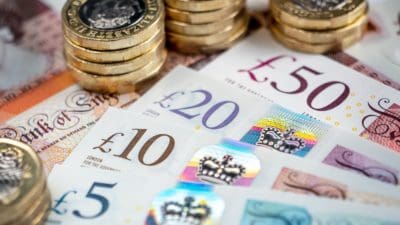
ISA coins

Image source: Getty Images

You’re reading a free article with opinions that may differ from The Twelfth Magpie’s Premium Investing Services. Become a member today to get instant access to our top analyst recommendations, in-depth research, investing resources, and more. Learn more, and get a free 'Best Buy Now' stock!.

For UK investors, a Stocks and Shares ISA is a powerful tool available to help deliver long-term wealth. And with all income and capital gains earned tax-free, it’s possible for an individual to achieve their personal investment objectives quicker than might otherwise be the case.

So how much does an ISA need to be worth to deliver £800 of passive income each month? And how long will it take to reach this level? Let’s find out by doing a bit of number crunching.

Should you buy HSBC Holdings shares today?

Before you decide, please take a moment to review this report first. Despite ongoing uncertainties from US tariffs to global conflicts, Mark Rogers and his team believe many UK shares still trade at substantial discounts, offering savvy investors plenty of potential opportunities to learn about.

That’s why this could be an ideal time to secure this valuable research – Mark’s analysts have scoured the markets to reveal 5 of his favourite long-term ‘Buys’. Please, don’t make any big decisions before seeing them.

Please note that tax treatment depends on the individual circumstances of each client and may be subject to change in future. The content in this article is provided for information purposes only. It is not intended to be, neither does it constitute, any form of tax advice. Readers are responsible for carrying out their own due diligence and for obtaining professional advice before making any investment decisions.

Some maths

Adopting the 4% rule and gradually withdrawing the capital from the investment pot, an ISA would need to be worth £240,000 to provide £800 a month (£9,600 a year).

Alternatively, an individual wishing to preserve their capital could buy some dividend shares. By way of an example, the yield on the FTSE 100 is currently (13 March) 2.8%. With a return like this, an ISA would need to be valued at £309,677 to deliver £800 a month. However, I think it’s possible to do better than this.

Such as?

Take HSBC (LSE:HSBA) as an example. Based on dividends paid over the past 12 months, it’s currently yielding 4.7%. With this level of return, an ISA of £204,255 would be needed to earn £9,600 a year.

Admittedly, this yield isn’t as good as the headline rate available from one of the bank’s regular savings accounts of 5%. However, most savers will have to pay tax on this. And it’s only possible to pay in a maximum of £3,000 over a 12-month period.

By contrast, subject to the annual investment limit of £20,000, there’s no restriction on the value of HSBC shares that can be held in an ISA, nor the level of dividends earned. And remember, any gains and income can be enjoyed tax-free. A word of warning though, dividends can never be guaranteed.

However, in my opinion, there are other reasons to consider the bank’s shares.

An impressive record

Of the FTSE 100’s five banks, HSBC ranks third comparing their historic (trailing 12-months) price-to-earnings ratios. And in 2025, its adjusted profit before tax grew 7% year-on-year.

For the same period, HSBC reported a 13.3% return on tangible equity. But for 2026-2028 it’s now targeting 17%, or more. The strength of its balance sheet means it retains enormous financial firepower and its brand is instantly recognisable across the world.

But there are challenges. Its margin (and earnings) could come under pressure if interest rates fall further. And an economic slowdown would be damaging, especially in Asia. The group’s already suffered heavy losses from the meltdown in China’s property market.

However, with its excellent track record of delivering income and growth, I think it’s an exciting stock to consider for a Stocks and Shares ISA.

Over the past five years, the bank’s share price has grown by an average of 24.9% a year. At this rate an investment of £3,000 a year would grow to an astonishing £1.246m within 25 years. Then, assuming HSBC’s current yield of 4.7% still applies, it would be producing an incredible second income of £58,562 a year.

Of course, it’s important to have a diversified portfolio. And there are plenty of other UK shares available that could complement HSBC in a high-performing Stocks and Shares ISA.


HSBC Holdings is an advertising partner of Motley Fool Money. James Beard has no position in any of the shares mentioned. The Motley Fool UK has recommended HSBC Holdings. Views expressed on the companies mentioned in this article are those of the writer and therefore may differ from the official recommendations we make in our subscription services such as Share Advisor, Hidden Winners and Pro. Here at The Motley Fool we believe that considering a diverse range of insights makes us better investors.

More on Investing Articles

DIVIDEND YIELD text written on a notebook with chart
Investing Articles

I’m targeting a yearly income of £6,898 from £20,000 in this FTSE heavyweight!

This FTSE dividend play looks far too cheap for the cash it throws off — and the mix of rising…

Read more »

Passive income text with pin graph chart on business table
Investing Articles

How much would I need to invest in this FTSE 100 dividend gem to aim for £14,754 a year in passive income?

Passive income is the goal for many investors, and this FTSE dividend star highlights the qualities that can turn long‑term…

Read more »

View over Old Man Of Storr, Isle Of Skye, Scotland
Investing Articles

How much do you need in a SIPP to earn a £667 monthly passive income?

Harvey Jones shows how investors could use the generous tax breaks available on a Self-Invested Personal Pension, or SIPP, to…

Read more »

Happy male couple looking at a laptop screen together
Investing Articles

Up 50% with a stunning 6.4% yield! How do Aviva shares do it?

Harvey Jones is hugely impressed by the recent performance of Aviva shares, and examines why the FTSE 100 insurer has…

Read more »

Satellite on planet background
Investing Articles

Down 19% to under £20! Is now exactly the right time for me to capitalise on BAE Systems’ bargain-basement share price?

BAE Systems’ share price has dropped sharply, but a far bigger long term demand cycle is only just beginning. Here’s…

Read more »

Person holding magnifying glass over important document, reading the small print
Investing Articles

Closing in on £33 and around an all‑time high, is this FTSE 250 favourite seriously mispriced?

With the shares pushing into record territory, I’ve revisited the underlying business, its growth outlook and the valuation picture investors…

Read more »

Close-up of British bank notes
Investing Articles

£20,000 invested in Barclays shares a year ago is now worth…

Barclays shares have quietly delivered a 41% return in just 12 months — and the long term numbers suggest the…

Read more »

Young black woman walking in Central London for shopping
Investing Articles

£9,000 in an ISA? Here’s how to target a £675 passive income with 7% investment trusts

Investment trusts can offer a huge and stable passive income every year. Royston Wild reveals three to consider -- including…

Read more »