We have some exciting news to share! The Motley Fool UK has now become The Twelfth Magpie -- an independent, UK-owned company, led by our long-serving UK management team — Mark Rogers, Chris Nials and Heather Adlington. In practical terms, it’s the same team you know, now fully focused on serving our UK readers and members.

Just as importantly, our approach remains unchanged: long-term, jargon-free, and on your side. This site is our new home, and there will be extra tweaks made across the coming few days as we settle in. So if anything looks a little off, please bear with us!

The content of this article was relevant at the time of publishing. Circumstances change continuously and caution should therefore be exercised when relying upon any content contained within this article.

Is it time to forget about the Footsie and look to the FTSE 250 for dividend shares?

Our writer considers whether income investors should turn to the UK’s second tier of listed companies when looking for dividend shares.

| More on:
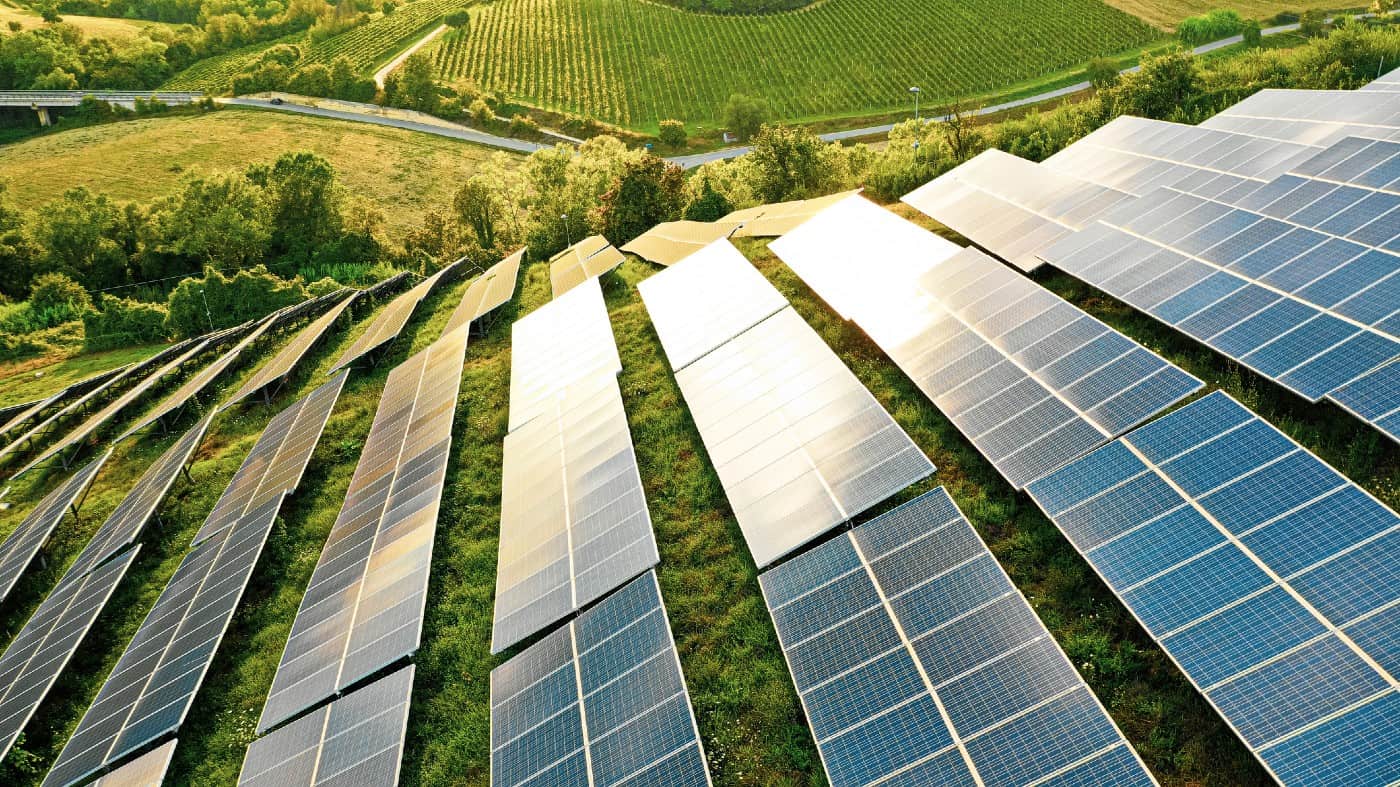
Solar panels fields on the green hills

Image source: Getty Images

You’re reading a free article with opinions that may differ from The Twelfth Magpie’s Premium Investing Services. Become a member today to get instant access to our top analyst recommendations, in-depth research, investing resources, and more. Learn more, and get a free 'Best Buy Now' stock!.

As a fan of dividend shares, I was surprised to learn the FTSE 250 is currently yielding more than the FTSE 100. According to data from the London Stock Exchange, at 28 February, the yield of the UK’s second tier of listed companies was 3.44%, slightly above the Footsie’s 3.38%.

Based on amounts paid over the past 12 months, there are 27 stocks (10.8%) on the index that are presently yielding 7% or more. By contrast, there are only seven on the FTSE 100 offering this level of return.

Should you buy NextEnergy Solar Fund shares today?

Before you decide, please take a moment to review this report first. Despite ongoing uncertainties from US tariffs to global conflicts, Mark Rogers and his team believe many UK shares still trade at substantial discounts, offering savvy investors plenty of potential opportunities to learn about.

That’s why this could be an ideal time to secure this valuable research – Mark’s analysts have scoured the markets to reveal 5 of his favourite long-term ‘Buys’. Please, don’t make any big decisions before seeing them.

But although the yield might be better, when it comes to growth, there’s a big variation in performance. From 1 March 2020 to 28 February 2025, the FTSE 100 (with dividends reinvested) increased by 59.9%. Over the same period, the FTSE 250 returned 20.3%.

A ray of sunshine

A disappointing share price performance is one reason why NextEnergy Solar Fund (LSE:NESF), which owns and operates solar PV and energy storage assets, has the second-highest yield on the FTSE 250. Since March 2020, it’s fallen 20%.

Based on its current stock price (21 March), it’s yielding 12.2%.Turn the clock back to September 2022, when the fund’s shares were at their five-year high, the yield was a more modest 5.9%.

However, in cash terms, its dividend is now 22% higher than it was for the year ended 31 March 2020. And with the demand for electricity continuing to rise, as long as the sun shines it should be able to continue to steadily grow its earnings and its dividend. In fact, since listing in 2014, it’s increased its payout every year.

The fund has 101 operating assets spread across the UK (around 85%) and Europe. These are enough to power over 300,000 homes for a year. At 30 September 2024, its portfolio had a remaining weighted asset life of 25 years. In my opinion, a steady stream of earnings therefore seems assured.

Future prospects

Because of what it does, I suspect NextEnergy Solar Fund is unlikely to deliver spectacular growth. Most of its revenue comes from long-term contracts and government subsidies. To increase its asset base significantly, it would probably need to borrow. As a result, its finance costs would rise, offsetting some of the additional income.

Encouragingly, the fund recently consolidated £205m of debt into one facility, at a lower rate of interest.

At the moment, the shares trade at a 28.4% discount to the fund’s net asset value. Although this is common for similar investment vehicles — valuing unquoted assets can be subjective — it’s bigger than average, which could suggest the recent sell-off has been overdone.

However, some of the differential could be explained by investor concerns. If interest rates stay higher for longer, earnings will be impacted. Also, despite increased investment in renewables, energy prices remain high. This could result in political pressure to cut subsidies.

It’s important to remember that dividends are never guaranteed. But with its focus on renewable energy — and its steady and reliable earnings stream — I think NextEnergy Solar Fund is well positioned to maintain its above-average payout. For this reason, I think it could make an excellent dividend share for income investors to consider.


James Beard has no position in any of the shares mentioned. The Motley Fool UK has no position in any of the shares mentioned. Views expressed on the companies mentioned in this article are those of the writer and therefore may differ from the official recommendations we make in our subscription services such as Share Advisor, Hidden Winners and Pro. Here at The Motley Fool we believe that considering a diverse range of insights makes us better investors.

More on Investing Articles

Midnight is celebrated along the River Thames in London with a spectacular and colourful firework display.
Investing Articles

Are we on the brink of a stock market crash – or a boom?

Investors are fixated on the SpaceX IPO, while also worrying about a global stock market crash. Harvey Jones's thoughts are…

Read more »

A senior man using hiking poles, on a hike on a coastal path along the coastline of Cornwall.
Investing Articles

How much do you need in a SIPP to target a £1,520 a month retirement income?

Mark Hartley outlines a strategy to beef up retirement income by making careful investments, and optimising them with the tax…

Read more »

A row of satellite radars at night
Investing Articles

3 possible ways to get a Stocks and Shares ISA into the new space age

Elon Musk's SpaceX IPO is dominating the headlines this week, but what might it mean for UK Stocks and Shares…

Read more »

Renewable energies concept collage
Investing Articles

National Grid shares: is this FTSE 100 dividend stock turning into a growth story?

National Grid shares have long been seen as a defensive play, but as electrification accelerates, Andrew Mackie argues it may…

Read more »

Young Black woman looking concerned while in front of her laptop
Investing Articles

BAE shares are falling: opportunity or warning?

Paul Summers takes a closer look at what's going on with BAE shares. Is the recent sell-off actually a wonderful…

Read more »

One English pound placed on a graph to represent an economic down turn
Investing Articles

How much passive income can I get from Lloyds shares at £1 each?

Ben McPoland explores how much passive income he would get back from a £1,000 investment in Lloyds stock today. Will…

Read more »

Wall Street sign in New York City
Investing Articles

What do the early stages of a stock market crash look like?

Christopher Ruane isn't peering into a crystal ball trying to time the next stock market crash. He's getting ready now,…

Read more »

Investing Articles

Has this FTSE 100 growth stock become too cheap to ignore?

Andrew Mackie looks at a FTSE 100 growth stock turnaround story after a sharp post-Covid sell-off and years of disappointing…

Read more »