We have some exciting news to share! The Motley Fool UK has now become The Twelfth Magpie -- an independent, UK-owned company, led by our long-serving UK management team — Mark Rogers, Chris Nials and Heather Adlington. In practical terms, it’s the same team you know, now fully focused on serving our UK readers and members.

Just as importantly, our approach remains unchanged: long-term, jargon-free, and on your side. This site is our new home, and there will be extra tweaks made across the coming few days as we settle in. So if anything looks a little off, please bear with us!

The content of this article was relevant at the time of publishing. Circumstances change continuously and caution should therefore be exercised when relying upon any content contained within this article.

Should I buy cheap bank shares like Lloyds and Natwest?

Our writer thinks some UK bank shares look quite cheap at the moment — depending on what happens to the economy. So, is he ready to buy them yet?

| More on:
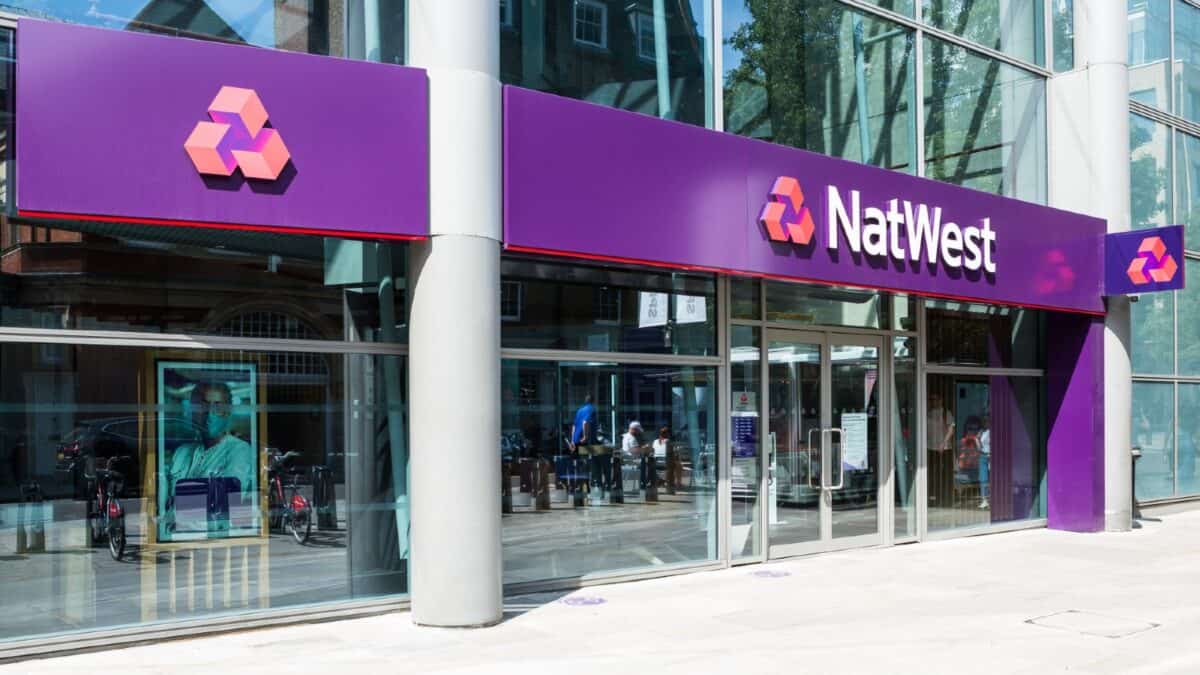
Branch of NatWest bank

Image source: NatWest Group plc

You’re reading a free article with opinions that may differ from The Twelfth Magpie’s Premium Investing Services. Become a member today to get instant access to our top analyst recommendations, in-depth research, investing resources, and more. Learn more, and get a free 'Best Buy Now' stock!.

The past few years have not been good ones for British banking shares. In the past five years, for example, Lloyds (LSE: LLOY) and Natwest (LSE: NWG) have fallen 22% and 2% respectively. Both now trade on a price-to-earnings ratio of under seven, making these shares look cheap.

A common way to value bank shares, though, is not using earnings but instead book value. However, on that basis, too, Lloyds and Natwest shares look cheap.

Should you buy Lloyds Banking Group Plc shares today?

Before you decide, please take a moment to review this report first. Despite ongoing uncertainties from US tariffs to global conflicts, Mark Rogers and his team believe many UK shares still trade at substantial discounts, offering savvy investors plenty of potential opportunities to learn about.

That’s why this could be an ideal time to secure this valuable research – Mark’s analysts have scoured the markets to reveal 5 of his favourite long-term ‘Buys’. Please, don’t make any big decisions before seeing them.

Both are trading at a sizeable discount to book value. In each case, buying one share now would give me a (theoretical) slice of the bank’s asset book for at least a quarter less than its value. I say theoretical because buying a share in a bank does not in itself let me claim a fraction of its asset base. But the point is clear: these shares in well-known British banks look cheap.

Ongoing concerns about the banking sector

But wait – other investors have access to the same information as I do. Yet both shares have declined in value over the past few years.

If these really are cheap shares — with dividend yields well above the FTSE 100 average (5.5% for Lloyds and 6.2% for Natwest) — why are investors not snapping them up in droves, pushing up the share prices?

One explanation is that investors have been burned before — badly.

Bank shares fared poorly during and after the 2008 financial crisis. Both Lloyds and Natwest shares are a fraction of what they were before then.

It is no coincidence that for many years, the government has been Natwest’s biggest shareholder. It stepped in to bail out the bank when it was in dire straits.

Another concern investors like me have is that it is not clear whether banking shares are as cheap as they look.

Take book value as an example.

That is largely based on what prices are taken to be. But in the property market, for example, having a house valued at £250,000 today does not mean that it will actually turn out to be worth that a year from now.

The fear holding many investors back is that a weak economy may push up default rates on loans. That could hurt profits at banks like Natwest and Lloyds, the country’s largest mortgage lender.

Possible value at current prices

For now, though, the signs of that happening are limited.

Last year, Lloyds saw post-tax profits surge 41% to £5.5bn. The rise at Natwest was a smaller but still impressive 23%, to £4.7bn.

If anything, banking earnings look robust and there could be room for future growth.

After all, both banks enjoy widespread name recognition, have large customer bases and operate in an industry known for its ability to generate sizeable profits. They proved that last year.

If that turns out to be the case, both look like cheap shares to me now.

But I think the global economy remains fragile, posing ongoing risks to banking profits. I am tiptoeing back towards the sector as an investor — but am not yet ready to buy.


C Ruane has no position in any of the shares mentioned. The Motley Fool UK has recommended Lloyds Banking Group Plc. Views expressed on the companies mentioned in this article are those of the writer and therefore may differ from the official recommendations we make in our subscription services such as Share Advisor, Hidden Winners and Pro. Here at The Motley Fool we believe that considering a diverse range of insights makes us better investors.

More on Investing Articles

Affectionate Asian senior mother and daughter using smartphone together at home, smiling joyfully
Investing Articles

Growth AND dividends? Check out this top cheap penny share!

Looking to get maximum bang for your buck? Consider this white-hot UK penny share with an 11.5% dividend yield and…

Read more »

Smiling young man sitting in cafe and checking messages, with his laptop in front of him.
Investing Articles

Snowflake lit up my ISA last week. Could this AI stock be next?

Edward Sheldon’s ISA got a massive boost last week when Snowflake shares surged 40%. He believes there’s more to come…

Read more »

A senior man using hiking poles, on a hike on a coastal path along the coastline of Cornwall. He is looking away from the camera at the view.
Investing Articles

How much would you need in an ISA to match the new State Pension and get another £12,547 a year?

Harvey Jones says nobody should rely purely on the State Pension to fund retirement. They should also aim to generate…

Read more »

Rear view image depicting a senior man in his 70s sitting on a bench leading down to the iconic Seven Sisters cliffs on the coastline of East Sussex, UK. The man is wearing casual clothing - blue denim jeans, a red checked shirt, navy blue gilet. The man is having a rest from hiking and his hiking pole is leaning up against the bench.
Investing Articles

How much is £9,999 invested in a Cash ISA 9 years ago worth today?

Harvey Jones says the Cash ISA may look tempting but is likely to shrink the value of your money over…

Read more »

Female student sitting at the steps and using laptop
Investing Articles

Are Lloyds shares 23% undervalued?

Lloyds shares have fallen in value since a high reached earlier this year. Could this be a sign the FTSE…

Read more »

happy senior couple using a laptop in their living room to look at their financial budgets
Investing Articles

Here’s why Legal & General is still one of the UK’s most popular SIPP buys

So far in 2026, UK SIPP investors have largely stuck to the same group of favourite FTSE 100 stocks. And…

Read more »

Mature people enjoying time together during road trip
Investing Articles

How have Aviva shares become a dividend juggernaut? 5 reasons why

With a long record of dividend growth and enormous yields, Aviva's shares are in high demand with income investors. Can…

Read more »

Middle aged businesswoman using laptop while working from home
US Stock

This is the most undervalued stock in the Dow Jones index

Jon Smith points out a Dow Jones stock with a price-to-earnings ratio below 10, with strong recent earnings that could…

Read more »