We have some exciting news to share! The Motley Fool UK has now become The Twelfth Magpie -- an independent, UK-owned company, led by our long-serving UK management team — Mark Rogers, Chris Nials and Heather Adlington. In practical terms, it’s the same team you know, now fully focused on serving our UK readers and members.

Just as importantly, our approach remains unchanged: long-term, jargon-free, and on your side. This site is our new home, and there will be extra tweaks made across the coming few days as we settle in. So if anything looks a little off, please bear with us!

The content of this article was relevant at the time of publishing. Circumstances change continuously and caution should therefore be exercised when relying upon any content contained within this article.

These FTSE 100 banks appear massively undervalued! Are they?

FTSE 100 banks trade at a discount to their American peers. That’s pretty clear. But are these markdowns warranted? Dr James Fox explores.

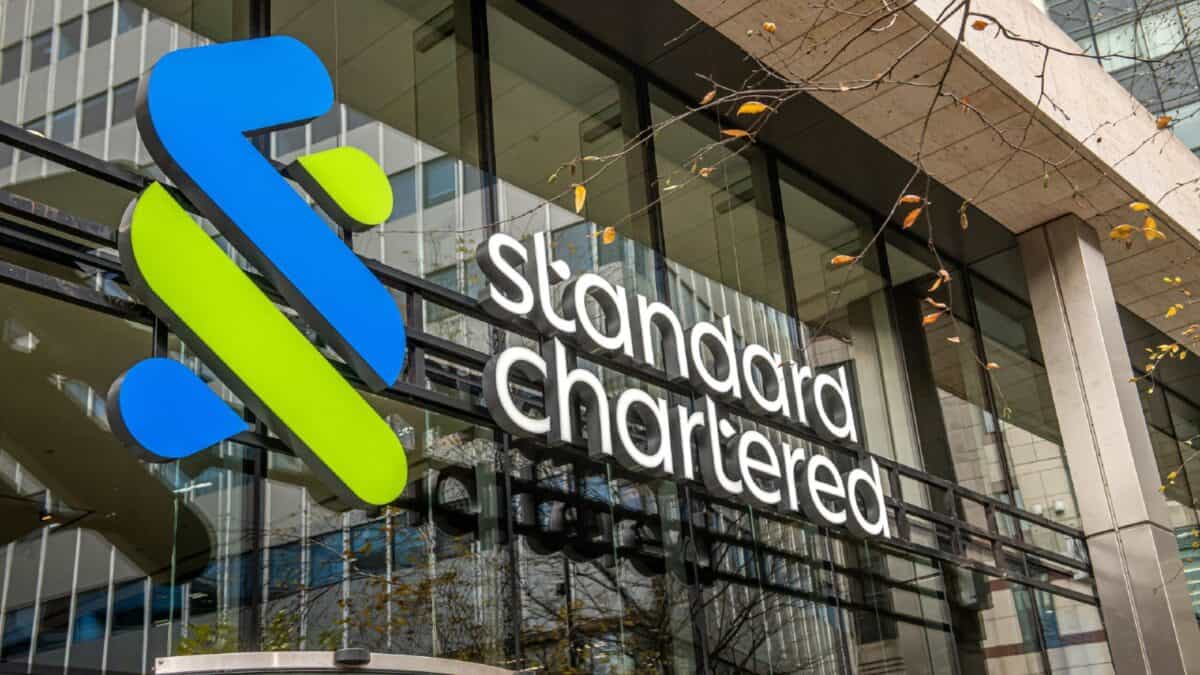
London offices of Standard Chartered

Image source: Standard Chartered plc

You’re reading a free article with opinions that may differ from The Twelfth Magpie’s Premium Investing Services. Become a member today to get instant access to our top analyst recommendations, in-depth research, investing resources, and more. Learn more, and get a free 'Best Buy Now' stock!.

Banks are well represented on the FTSE 100. We have Barclays, HSBC, Lloyds, NatWest and Standard Chartered. These remain some of the biggest financial institutions in the world, but British banking industry market-cap is a fraction of the size it was prior to the financial crash.

Today, UK-listed banks tend to change hands with much cheaper valuation metrics than their US-listed peers. This isn’t unusual as the latter stocks tend to trade at a premium. But there are few places this premium is as large as the financial sector.

Should you buy Rolls Royce shares today?

Before you decide, please take a moment to review this report first. Despite ongoing uncertainties from US tariffs to global conflicts, Mark Rogers and his team believe many UK shares still trade at substantial discounts, offering savvy investors plenty of potential opportunities to learn about.

That’s why this could be an ideal time to secure this valuable research – Mark’s analysts have scoured the markets to reveal 5 of his favourite long-term ‘Buys’. Please, don’t make any big decisions before seeing them.

Undervalued on earnings

One of the most common valuation barometers is the price-to-earnings (P/E) metric. This is a financial ratio that compares a company’s current stock price to its earnings per share (EPS).

Investors and analysts use the P/E ratio as a tool to assess the relative value of a company’s stock. Higher ratios suggest a company is more expensive, and lower valuations suggest a company is cheaper.

Here’s how FTSE 100 banks compare with their US counterparts. As we can see, all five UK-listed banks trade at a substantial discount to these three chosen US-listed banks. This infers that UK banks are better value.

P/E Forward
Barclays6.1
HSBC5.7
Lloyds5.8
NatWest4.6
Standard Chartered6
Bank of America8.2
Goldman Sachs13.9
JP Morgan8.8

Undervalued versus book value

Another useful metric is the price-to-book (P/B) valuation. This ratio compares a company’s current market price per share to its book value per share.

The P/B ratio is particularly valuable for investors who focus on the company’s balance sheet and asset base. A P/B ratio below one may suggest the stock is trading at a discount to its book value, indicating a potential undervaluation.

Here’s how FTSE 100 banks compare with their US counterparts on the P/B ratio. Once again, there’s a clear trend suggesting US banks are more expensive than their UK peers.

P/B
Barclays0.37
HSBC0.86
Lloyds0.55
NatWest0.49
Standard Chartered0.51
Bank of America0.85
Goldman Sachs1.06
JP Morgan1.46

What about prospects?

Of course, stocks are also valued on their expected performance in the coming years, not just the year ahead or their asset values.

After all, a higher P/E often means investors expect more growth from the stock in question.

In the UK, analysts have registered their concerns about the impact of a severe economic downturn on credit defaults. This is undoubtedly weighing on the share prices of UK-focused banks like Barclays and Lloyds, even as these concerns become less worrisome.

While there are plenty of considerations, a useful metric which takes into account a company’s prospects and growth is the PEG ratio. This factors in both the P/E ratio and the expected earnings growth rate of a company.

The PEG ratio helps investors assess whether a stock is fairly valued, overvalued, or undervalued, based on its earnings growth expectations.

A PEG ratio below one may indicate that the stock is undervalued, considering its growth potential.

PEG Forward
Barclays1.22
HSBC0.57
Lloyds0.48
NatWest0.44
Standard Chartered0.83
Bank of America1.44
Goldman Sachs1.72
JP Morgan1.76

Once again, the data suggests US companies are more expensive than their British peers. This is the type of data that informs my investment decisions.


JPMorgan Chase is an advertising partner of The Ascent, a Motley Fool company. Bank of America is an advertising partner of The Ascent, a Motley Fool company. HSBC Holdings is an advertising partner of The Ascent, a Motley Fool company. James Fox has positions in Barclays Plc, Lloyds Banking Group Plc, NatWest Group, and Standard Chartered Plc. The Motley Fool UK has recommended Barclays Plc, HSBC Holdings, Lloyds Banking Group Plc, and Standard Chartered Plc. Views expressed on the companies mentioned in this article are those of the writer and therefore may differ from the official recommendations we make in our subscription services such as Share Advisor, Hidden Winners and Pro. Here at The Motley Fool we believe that considering a diverse range of insights makes us better investors.

More on Investing Articles

Investing Articles

Could now be the time to buy great UK shares at bargain prices?

Some UK shares have been trading exuberantly, with the FTSE 100 hitting hew highs in 2026. Does that mean there…

Read more »

piggy bank, searching with binoculars
Investing Articles

Prediction: this stock could surge 51% in my SIPP and ISA by 2027

Ben McPoland explains why he's bullish on this growth stock in his ISA and SIPP portfolios, despite it falling 25%…

Read more »

Satellite on planet background
Investing Articles

Is SpaceX on my list of shares to buy in July?

SpaceX shares have been falling. But the wait for a return from the business might be longer than the wait…

Read more »

ISA coins
Investing Articles

£10,000 put in a Cash ISA at the start of 2026 is now worth…

We're only halfway through the year, but has a Cash ISA beaten stock market returns so far? Our writer digs…

Read more »

Young woman carrying bottle of Energise Sport to the gym
Investing Articles

Still stubbornly in pennies, will the JD Sports share price hit £1 again?

Christopher Ruane reckons the JD Sports share price looks cheap but it's already been in pennies for many months. What's…

Read more »

Middle aged businesswoman using laptop while working from home
Investing Articles

Can an ISA outperform the stock market? Yes – here’s how!

Many investors dream of using their ISA to do better than the market overall. This writer knows it's possible --…

Read more »

Asian man looking concerned while studying paperwork at his desk in an office
Investing Articles

Dear SpaceX stock fans, mark your calendar for 7 July

SpaceX stock is getting fast-tracked into the world's leading technology index. Should I buy shares of the rocket maker before…

Read more »

A young black man makes the symbol of a peace sign with two fingers
Investing Articles

Here are 2 FTSE shares I’m excited about this July — and 1 I’m avoiding

As we head into the second half of the year, Mark Hartley identifies two undervalued FTSE shares that are flashing…

Read more »