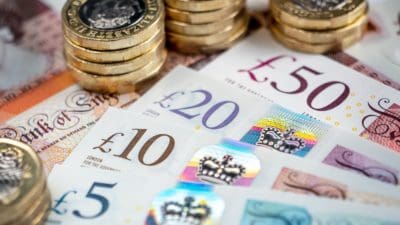
Ah, the dawn of the twenty-first century, with its high-tech inspired optimism for world peace, pessimism (remember the Y2K bug?) and, naturally, an old man with an unfeasibly large beard on the shiny new £10.
In 2000, Charles Darwin was already a century and a half behind the radical fringe of science, which makes you wonder why the Bank of England chose the Victorian naturalist to adorn its first fresh £10 note design of the century.
On the other hand, Darwin’s theory of evolution was so seismic it probably qualifies him as a radical for the ages.
Either way, the tenner sporting his hirsute face was the latest evolution in paper money back then. Anti-forgery features such as tiny letters and holographic imagery put it on the cutting-edge of currency.
Down with Darwin
Alas, it is survival of the fittest in the world of bank notes. To keep ahead of the counterfeiters, the paper Darwin note has now been superseded by the Jane Austen polymer version.
But you could say the £10 note has been losing its worth for years. And the culprit, of course, is inflation.
Analysts at the fund house M&G calculate a £10 note stuffed under a mattress since 2000 would be worth just £6.17 in today’s money.
That means Darwin’s £10 has lost 40% of its spending power in just 18 years!
What if you’d taken it to the bank instead of sleeping on it, and earned interest? Well, M&G reckons it would now be worth £7.27 in real terms.
That seems low to me, but M&G cites a measure called the UK Savings 2500+ Index, which is widely quoted and purports to track the interest earned on the typical High Street savings account.
As we all know, most savings accounts have paid roughly zip in the decade since the financial crisis, although I suppose canny savers could have done better by chasing Best Buy rates.
Either way, the message is clear. Inflation rapidly eroded the value of a £10 note, and you had to take some sort of action to preserve your wealth.
Ahead with equities and property
Of course, we Fools think the action you should have taken over the past 18 years with cash was to invest a chunky portion of it into ‘real’ assets, such as shares.
And over the long term, you should be rewarded for taking some short-term risk with your money by looking beyond cash savings accounts.
The following table of the past 18 years of returns makes this plain:
|
Asset class |
Nominal value |
Real value |
|
Cash in piggy bank |
£10 |
£6.17 |
|
Cash savings account |
£11.78 |
£7.27 |
|
FTSE All-Share index |
£24.13 |
£14.90 |
|
UK Government bonds |
£24.70 |
£15.25 |
|
UK Residential property |
£25.79 |
£15.92 |
|
UK Commercial property |
£37.26 |
£23.00 |
The table assumes in every case except for piggy banks and residential property that income was reinvested. Fair enough in the case of a piggy bank, but not really an apples-to-apples comparison with houses, given that a landlord would have also enjoyed rental payments (or a home owner enjoyed living in his or her house). Still, that’s the data that’s available.
Anyway, I wouldn’t take this table to be a definitive guide as to where you should be investing for maximum returns. Asset returns wax and wane over the years, and it’s important to be diversified as we can never be sure what will do best.
The point is that most of your money should probably not be in cash.
The latest iteration of the closely followed Credit Suisse Global Yearbook has just confirmed the same thing, as it has for many years. The 2018 edition reports that over the last 117 years, cash produced just 1% in annual real returns in the UK, compared to 5.5% for shares.
Over the several decades of a typical investor’s lifetime, the cost of sitting in cash is astronomical.
Time to cash out
I personally think everyone should have some cash. A chunk should be in an emergency fund for when the boiler blows up or your car breaks down.
You can also hold some cash as a financial (and emotional) buffer against market turbulence, and perhaps another allocation earmarked as ‘dry powder’ that you can use to cheer yourself up buying cheap shares when markets fall.
But with inflation running at around 3%, you don’t need the intellect of Darwin or the imagination of Austen to see how the real value of your money will be eroded over the next 20 years if you hold much more than that!